

Markham Show Cause Hearing Lawyer: What Happens at Bail Court
Home › Markham Criminal Defence › Show Cause Hearings
Within 24 hours of an arrest in Markham, you or your family member is in front of a justice at the Newmarket courthouse, usually by video, for what the Criminal Code calls a show cause hearing and everyone else calls bail court. Decisions get made in that room fast, and people are asked to make them without understanding the machine they are inside. This page walks through the hearing itself, step by step: who is in the room, what evidence the Crown can use, what the justice is legally allowed to consider, and the two ways the day can end.
One thing before the anatomy lesson. This page explains how the hearing works. How we prepare and win the hearing itself, from release plans to reverse-onus strategy, lives on our Markham bail lawyer page. Read this one first, then that one.
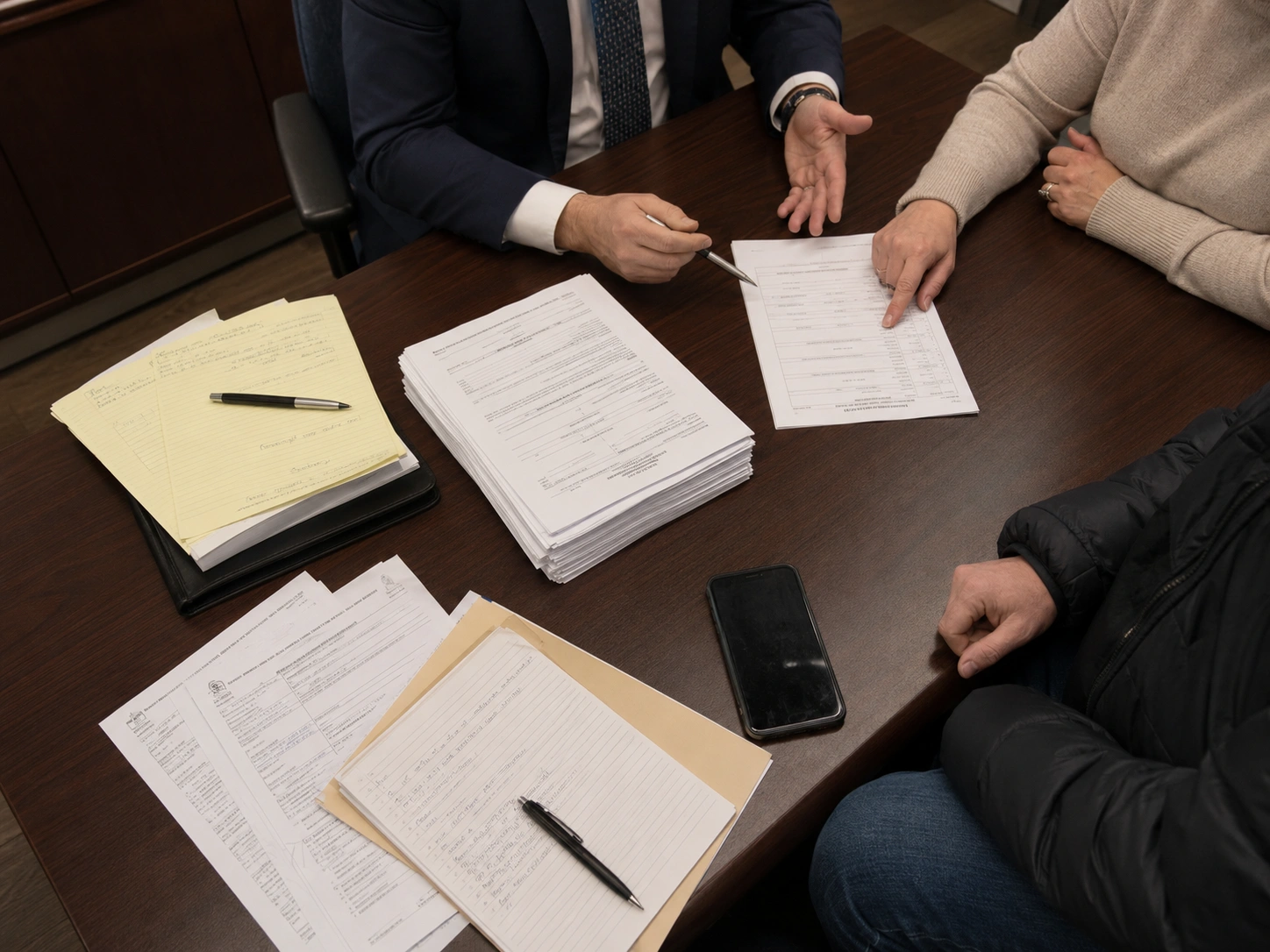
Someone you love is in custody in York Region? The show cause hearing may be hours away. What gets said in that room follows the case forever, so get counsel moving now.
Call 647-588-3234Free consultation, day or night before a bail hearing. Thornhill office serving Markham and all of York Region.
- Why it is called a show cause hearing
- When the burden sits on you instead
- The clock: from the cells to the courtroom
- Who speaks for you
- Who is actually in the room at 50 Eagle St. W.
- The evidence rules are not trial rules (s. 518)
- The three grounds, in the statute's order
- The ladder: five forms of release, tried in order
- If you are released: how conditions get set
- Consent releases
- The surety's day, hour by hour
- A day-of checklist for families
- Video bail
- The two ways the day ends
- Anatomy here, strategy there: our bail page
- Frequently asked questions
Why it is called a show cause hearing
The name is the law's whole philosophy in two words. Under s. 515(1) of the Criminal Code, the default outcome for a person charged with an offence is release on an undertaking without conditions. Anything more restrictive, conditions, sureties, cash, detention, is a departure from the default, and the Crown must show cause why that departure is justified. You do not start the day having to earn your freedom. The prosecutor starts the day having to justify taking it.
That is the theory, and defence counsel's job is holding the room to it. In practice the pace of a busy bail court pulls the other way: synopses get read quickly, standard condition packages get proposed out of habit, and an unrepresented person can agree to a dozen restrictions in ninety seconds without hearing the words show cause once. Knowing that release without conditions is the legal starting point changes how you listen to everything that follows.
When the burden sits on you instead: reverse onus
Section 515(6) lists situations where Parliament flips the presumption. In those cases the justice must detain unless the accused shows cause why release is justified. The categories that come up most at Newmarket:
| Reverse-onus category | Where it comes from |
|---|---|
| An indictable offence allegedly committed while you were already on release for another indictable charge | s. 515(6)(a)(i) |
| Offences alleged for a criminal organization, and terrorism offences | s. 515(6)(a) |
| Listed firearms and weapons offences, a list Parliament expanded in January 2024 | s. 515(6)(a), as amended by Bill C-48 |
| An offence against an intimate partner where you have a prior conviction, or now a prior discharge, for intimate partner violence | s. 515(6)(b.1) |
| A repeat serious weapons violence allegation within five years of a similar conviction, both carrying 10 years or more | s. 515(6)(b.2), added by Bill C-48 |
| A s. 145 charge, breaching bail papers, allegedly committed while on release | s. 515(6)(c) |
| Trafficking, importing and production offences under the Controlled Drugs and Substances Act that carry life | s. 515(6)(d) |
Since the January 2024 amendments, the justice must also consider any statement from the Crown about a victim or community safety concern, and the record must show it was considered. If your charge sits in a reverse-onus category, the hearing is a different animal: you arrive building a case, not answering one. That is strategy territory, and it is exactly what our Markham bail lawyer page is about.
The clock: from the cells to the courtroom
Section 503 sets the outer limit: a person held in custody must be brought before a justice within 24 hours where one is available, or as soon as possible otherwise. In York Region that means the Newmarket courthouse at 50 Eagle St. W., and it means weekends do not pause anything, because the Ontario Court of Justice runs bail courts on weekends and statutory holidays. Most first appearances happen by video from the police station or the detention centre.
Once the matter is in court, the adjournment rules take over. Under s. 516, a justice cannot adjourn a bail hearing for more than three clear days at a time without the accused's consent. That protects you from drifting in custody, but it also creates the central timing decision of the day: run the hearing now, or take a short, planned adjournment to line up sureties, verify an address and build a release plan that will actually hold. A rushed hearing that ends in detention costs far more time than a one-day delay, because after a detention order the path back runs through a formal review. Duty counsel, reachable through Legal Aid Ontario at the courthouse, can run hearings for people who financially qualify, and they do demanding work at speed. What retained counsel adds is preparation before anyone stands up: the plan, the sureties, the paperwork, ready before the file is called.
Under the practice direction in force since June 1, 2026, the OCJ has pushed bail toward video appearances and set targets for how quickly matters should move through the list, including same-day consent releases. The pace is real. The way to use it is arriving prepared rather than reacting.
Duty counsel, retained counsel, or alone: who speaks for you
Three ways to be represented at a show cause hearing, and they are not equivalent. Duty counsel are Legal Aid Ontario lawyers at the courthouse who assist people who financially qualify, and at a bail court they do difficult work at speed: interviewing in the cells, proposing plans, running the hearing itself. What they cannot do is what no lawyer meeting you an hour before court can do: verify your surety's finances in advance, pre-build a supervision plan around your actual home and job, or prepare your people for cross-examination. Retained counsel starts earlier, which is the entire advantage. The hearing is one hour; the preparation is what wins it.
Appearing alone is legal and almost always a mistake, for one structural reason this page keeps returning to: everything in bail court happens fast and on the record. An unrepresented person who cheerfully agrees to a standard package of conditions has just signed up for a dozen criminal exposure points without a single question asked. If money is the obstacle, ask duty counsel for help that day and get advice afterwards about the file. Do not fill the gap by improvising.
Who is actually in the room at 50 Eagle St. W.
Markham has no criminal courthouse, so every York Region bail matter runs through the Newmarket building, where the Ontario Court of Justice and the Superior Court of Justice sit under one roof. The bail courtroom, physical or virtual, holds a fixed cast. The justice, who makes the decision. The Crown, who reads the allegations and takes a position on release. Defence counsel or duty counsel, speaking for the accused. The accused, most often appearing by video from custody rather than sitting in the room. Proposed sureties, who since the June 2026 practice direction may attend by audio or video rather than taking a day off work to sit in a gallery. Family members, who can attend and whose quiet presence matters more than they think. And where needed, an interpreter, which the court arranges.
Two practical notes for families. First, the person you are supporting can usually see or hear the courtroom but not you, so do not expect a reunion moment; the work happens through counsel. Second, bring nothing you would not want searched and say nothing in the building you would not want overheard. The hallway outside a bail court is not a private place.
The evidence rules are not trial rules: s. 518
The single biggest surprise for first-timers is how informal the evidence is. Section 518 governs what a bail justice can hear, and it deliberately relaxes the trial rulebook.
Then there is the shield, and it matters enormously. Under s. 518(1)(b), the accused cannot be examined about the offence charged by the justice or by anyone except their own counsel, and cannot be cross-examined about it unless they testify about it themselves. Translated: if you testify about your job, your address, your sureties and your plan, choosing to speak to your release does not hand the Crown a free cross-examination about the allegations. You can support your bail case without touching the charge. Where the line sits in a live hearing is precisely the kind of judgment call counsel is there to make, because if you raise the offence in your evidence, the protection narrows.
Families should understand the flip side. Because hearsay is admissible, the synopsis, written by police in the hours after arrest, arrives sounding confident and complete, and it is neither tested nor cross-examined that day. Bail decisions get made on an untested narrative. That is not a reason for despair. It is the reason preparation and a credible release plan carry so much weight, because they are the part of the record the defence fully controls.
The three grounds, in the statute's order
However serious the allegation, s. 515(10) permits detention on exactly three grounds, and every argument in the room must attach to one of them.
- The primary ground: flight. Is detention necessary to ensure you attend court? Roots, family, employment, immigration status, travel history and the strength of sureties all live here.
- The secondary ground: public safety. Is there a substantial likelihood of reoffending or interfering with witnesses if released, including any risk to the safety of victims and witnesses? Conditions are usually the answer argued: no-contact, no-go, residence, supervision.
- The tertiary ground: confidence in the administration of justice. Would release, in the circumstances, undermine a reasonable and properly informed public's confidence in the justice system? The Supreme Court held in R. v. St-Cloud, 2015 SCC 27, that this ground is not to be treated as rare or exceptional, and that it is measured through the eyes of a reasonable member of the public who understands the presumption of innocence, not the angriest voice in a comment section. It matters most on the gravest allegations.
For a short list of the most serious offences under s. 469, murder chief among them, the bail decision is not made in the Ontario Court of Justice at all: the accused must be detained there and bail is decided by a Superior Court judge, in York Region sitting in the same Newmarket building.
The ladder: five forms of release, tried in order
If the justice decides release is appropriate, s. 515(2) sets out the forms it can take, from an undertaking with conditions through recognizances with or without sureties and with or without deposit. Since 2019, the ladder principle is written directly into the Code at s. 515(2.01) to (2.03): the justice must not impose a more onerous form of release unless the Crown shows why a less onerous one is inadequate, and a surety requirement is treated as one of the most onerous steps, available only where nothing lighter will do.
The Supreme Court put teeth into this in R. v. Antic, 2017 SCC 27: the ladder must be followed strictly, and cash bail is exceptional, reserved for narrow circumstances rather than used as a default show of seriousness. Families feel this one directly. The instinct is to arrive waving savings at the problem. Resist it. A promise to pay backed by a credible surety is the norm; money on the table is not what wins release, and offering more restriction than the law requires can quietly ratchet the whole hearing upward. Let the Crown justify each rung. That is its job, not yours.
If you are released: how conditions get set
Release almost never comes bare. Section 515(4) gives the justice a menu: report to police, stay in the jurisdiction, live at a stated address, be amenable to a curfew, no-contact terms protecting named people, no-go zones around addresses, abstention terms, and more. For listed offences involving violence, weapons or intimate partners, s. 515(4.1) requires the court to address a weapons prohibition as a term of release. If you hold a firearms licence for work or sport, say so before the order is made, not after.
The controlling principle comes from R. v. Zora, 2020 SCC 14: bail conditions must be minimal, necessary and linked to a specific risk under one of the three grounds. Conditions are not free. Every term you accept in a ninety-second appearance is a term you can be criminally charged for breaching under s. 145 a month later, when the plaza you both shop at or the school you both use turns a coincidence into an allegation. In a commuter city like Markham, geography-blind conditions fail people constantly. Fight the wording while it is still wording. If a condition later stops fitting your life, the lawful fixes exist, and breaching is not one of them; our Markham failure to comply page shows what happens when that lesson is learned too late.
Consent releases: when there is no fight at all
Not every show cause hearing is a battle. On many files the Crown, after speaking with defence counsel, agrees to release on a set of proposed terms, and the appearance becomes a short confirmation rather than a contest. The practice direction in force since June 2026 pushes courts to complete same-day consent releases quickly, so a worked-out position in the morning can genuinely mean home by dinner.
Two cautions stop the good news from curdling. First, a consent release is still a negotiated release, and everything in it is wording someone chose. The difference between within 100 metres of the complainant's home and any place the complainant is known to be is the difference between a liveable year and a breach charge waiting to happen, and that wording gets fixed before it is read into the record, not after. Second, consenting to release is not the Crown doing you a favour to be repaid with silence. It reflects the file. Counsel's job on a consent day is quieter but identical: make the terms fit your actual geography, your work schedule and your family obligations, then make sure you understand every numbered line before you sign it.
The surety's day, hour by hour
A surety is not a character reference. A surety is a person who signs onto the release order, pledges an amount of money, and takes on a supervision job the court is trusting them to do. On the day, expect four things. First, vetting: counsel or duty counsel will go through your finances, background and relationship with the accused, because the court weighs means, character and real ability to supervise. Second, evidence: you may testify, briefly, about the plan, the home, the rules you will enforce and what you will do if they are broken, including calling the police. Third, the pledge: in most cases you promise an amount rather than depositing it. Fourth, the paperwork, after which your obligations are live.
Since the June 2026 practice direction, sureties can attend by audio or video, which for working families across Markham is the difference between participating and not. Know the two hard rules before you agree. Charging or accepting a fee for acting as a surety is illegal. And if things go wrong, the pledged money is at risk through a forfeiture hearing on at least 10 days notice, where a judge may order all, part or none of it paid. A surety can also apply to be relieved of the role, which typically puts the accused back in custody until new arrangements are made. It is a real job. Take it on with your eyes open, and bring identification and a realistic picture of your finances when you come.
A day-of checklist for families
Families ask what they can actually do. Practical answers, none of which involve the allegations themselves.
- Be reachable from early morning. Counsel may need a surety confirmed, an address checked or a document photographed on an hour's notice while the list moves.
- Have identification and a realistic financial picture ready if you may stand as surety, because suitability gets probed, and audio or video attendance still requires you to be organized at the other end of the line.
- Plan for the day, not the hour. Bail lists run long, matters get stood down, and video links drop. Arrange childcare and work coverage so a 4 p.m. call does not find you driving.
- Say nothing about the case. Not in the hallway, not on social media, and not on calls with the person in custody, which you should assume are not private. Support sounds like we love you and the lawyer is on it, full stop.
- Do not contact the complainant or witnesses for any reason, including to help. It can generate new charges and poison the very plan being proposed.
The quiet, organized family in the gallery is doing more for the hearing than they realize. Justices notice who shows up.
Video bail: how the virtual courtroom works
Since June 1, 2026, a province-wide practice direction has made video the default posture for bail work in the Ontario Court of Justice: contested hearings proceed by video unless the court directs otherwise, sureties may attend by audio or video, and the accused usually appears on a screen from custody rather than in the prisoner's box. For Markham families this mostly helps. A surety on a lunch break in a quiet office can participate in a hearing that once required a lost day in a Newmarket gallery.
Treat the screen like the room, because legally it is the room. Find a quiet space, keep the camera steady, have your documents in reach, and expect to be sworn and questioned exactly as if you were standing in the courtroom. Interpreters are arranged by the court and work over the link. Do not record anything, do not let others drift through the frame, and do not coach or signal to the person in custody; everyone can see you, including the justice deciding whether you are a credible supervisor. When technology fails, and some days it does, matters get stood down and recalled. Stay reachable and let counsel manage the list. We keep specifics like connection details out of public pages deliberately: the court provides them for each appearance, and only those.
The two ways the day ends
Every show cause hearing ends in one of two orders, and both start a new phase rather than ending the story.
Released. The order is signed, and its conditions bind you from that moment, in the parking lot, at home, everywhere. Get a copy, read every numbered term with counsel the same week, and treat anything ambiguous as forbidden until advised otherwise. If circumstances change, a written variation on consent exists under s. 519.1, so the order can follow your life lawfully.
Detained. A detention order is not the end. It is reviewable before a Superior Court judge, sitting in the same Newmarket building, and for a person whose trial has not started within 90 days the law requires an automatic detention review. The routes, tests and timing all live on our Markham bail review lawyer page, which is the page to read next if the hearing went wrong. What matters on day one is protecting the record, because everything said at the first hearing becomes the baseline the review works from.
Anatomy here, strategy there: two different pages
This page exists to demystify the machine: the defaults, the evidence rules, the grounds, the ladder, the cast. It deliberately does not cover how we prepare a winning release plan, how we run reverse-onus hearings, how we choose and prepare sureties for cross-examination, or when we consent to conditions versus fighting them. That is the strategy layer, and it lives on our Markham bail lawyer page. For the province-wide legal picture, our Ontario show cause hearing page and Ontario bail lawyers page go deeper on the statutory framework, and the Markham criminal defence hub maps every charge type we defend at Newmarket.
Why families in Markham call us for the hearing itself: bail is a same-day craft. Founding partner Fadi Matthew Kazandji and senior counsel appear at the Newmarket courthouse regularly, prepare release plans before the file is called, and treat the first 24 hours as the most important day of the case, because statistically and practically, it is. Our Thornhill office at 7191 Yonge St., Suite 310 serves Markham and York Region, with meetings also available at 180 John St., Unit 320 in Toronto, North York and Oakville.
Results matter. See our recent case successes and read our client reviews on Google, then call 647-588-3234 for a free, confidential assessment of yours.
Bail court does not wait for business hours, and neither do we. If the show cause hearing is tomorrow morning, tonight is when the plan gets built.
Call 647-588-3234 nowFree consultation. Video-ready sureties, same-day release plans, Newmarket courthouse.
Show cause hearings at Newmarket: frequently asked questions
What is a show cause hearing?
It is the formal name for a bail hearing. Release without conditions is the legal default, so the Crown must show cause why you should be detained or released only on terms under s. 515. In some listed situations the onus reverses and you must show why release is justified.
How fast will it happen?
A person held in custody must be brought before a justice within 24 hours where one is available, or as soon as possible otherwise (s. 503). York Region matters proceed at the Newmarket courthouse, and the OCJ runs weekend and holiday bail courts, mostly by video.
Can the hearing be delayed?
Only in short steps. Without your consent, a justice cannot adjourn a bail hearing for more than 3 clear days at a time (s. 516). Sometimes a short, planned adjournment to line up sureties and verify a plan beats a rushed hearing.
What are the only reasons a court can detain me?
Three grounds under s. 515(10): risk that you will not attend court, a substantial likelihood of reoffending or interfering with witnesses if released, and maintaining public confidence in the administration of justice in the most serious cases.
What evidence can the Crown use against me at bail?
The rules are relaxed by s. 518: the justice may act on any evidence considered credible or trustworthy, which usually means a police synopsis rather than live witnesses. The Crown can also lead your criminal record, outstanding charges, past breaches and the apparent strength of its case.
Can I be forced to testify or be cross-examined about the allegations?
No. Section 518 protects you: only your own lawyer may examine you about the offence charged, and you cannot be cross-examined about it unless you testify about it yourself. Speaking to your release plan does not open the allegations up.
Does the court hear from the alleged victim?
The justice is required to take into consideration any evidence submitted about the need to ensure the safety or security of a victim or witness (s. 518(1)(d.2)), and conditions like no-contact terms are shaped around that evidence.
What is the ladder principle?
Courts must start at the least onerous form of release and reject each step before imposing a stricter one, up to sureties (s. 515(2.01) to (2.03); R. v. Antic, 2017 SCC 27). Cash deposits are the exception, not the rule.
What makes a good surety?
Someone with a real ability to supervise you, a stake the court can trust, and no fee involved, because charging to act as a surety is illegal. Sureties pledge an amount that is usually not deposited up front, and they can attend the hearing by audio or video.
What conditions should I expect if released?
Only conditions that are minimal, necessary and tied to a real risk are lawful (R. v. Zora, 2020 SCC 14). Typically that means attendance terms, no-contact or no-go clauses, residence terms, and sometimes weapons or abstention conditions. Every condition you accept is one you can be charged under later, so the wording is worth arguing.
What happens if bail is denied?
A detention order is reviewable. You can apply to a Superior Court judge, who in York Region sits in the same Newmarket building, and long detentions receive an automatic judicial review once trial has not started within 90 days. See our Markham bail review page for the routes.
Is this page the same as your Markham bail lawyer page?
No. This page explains the hearing itself so you know what is coming. Our Markham bail lawyer page covers strategy: how we build release plans, handle reverse onus situations and prepare sureties. Read this one first, then that one.
This page is legal information about the bail process for people arrested in Markham and York Region, not legal advice about your situation. Criminal Code provisions were checked against the official federal versions current to May 26, 2026, and court practice evolves. Publication restrictions can apply to bail proceedings, so speak with counsel before repeating anything from a hearing. Kazandji Law, 180 John St., Unit 320, Toronto, and 7191 Yonge St., Suite 310, Thornhill. Free consultations: 647-588-3234.