

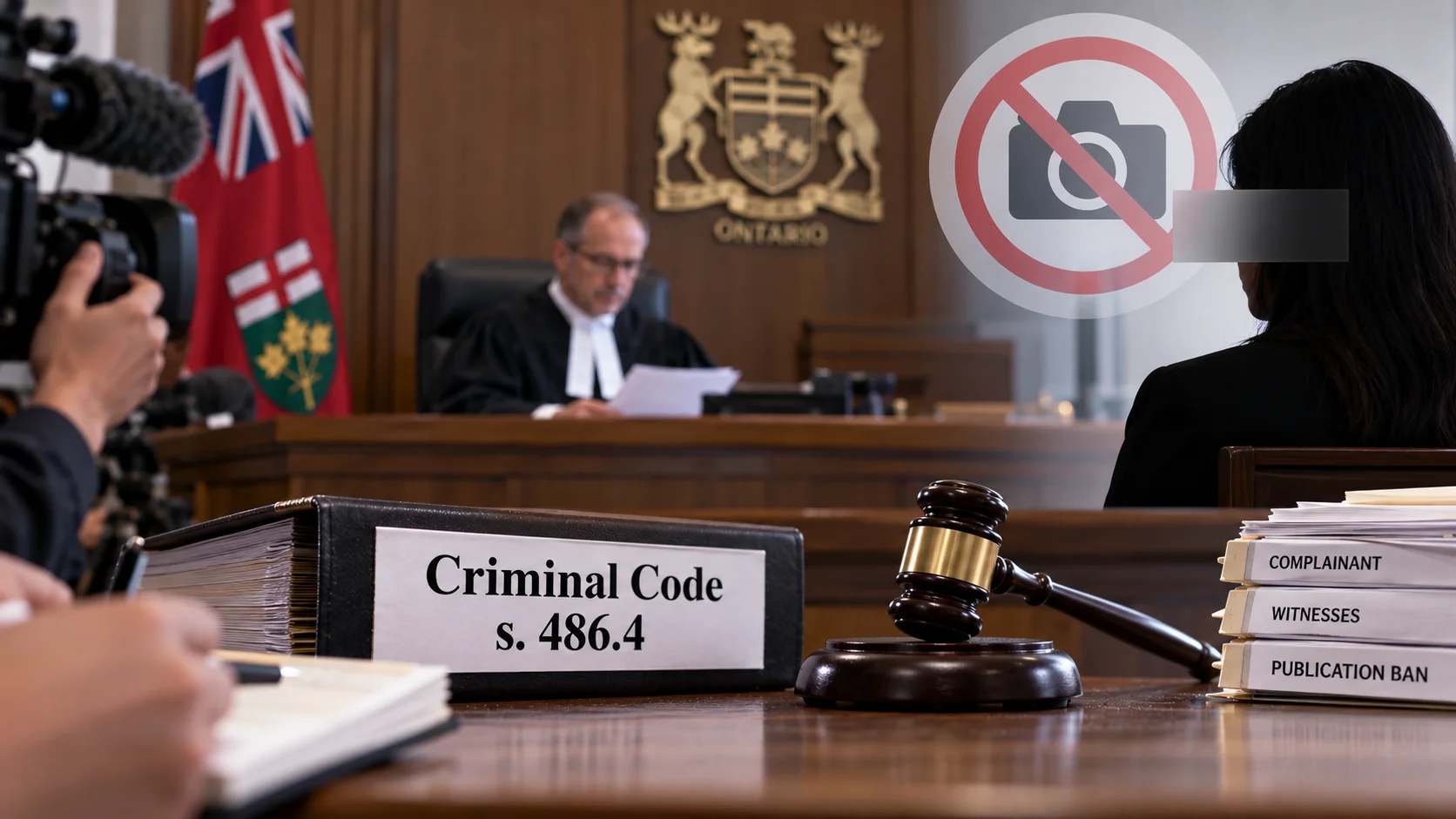

A publication ban in a sexual assault case usually protects the identity of the complainant and certain witnesses, not the accused person. In Ontario, section 486.4 of the Criminal Code makes the ban mandatory when a qualifying person or the prosecutor asks for it, but the order does not automatically make the case private. Kazandji Law helps people charged with sexual offences understand the order, avoid accidental breaches and deal with the wider court process.
Key Takeaways
The ban controls publication of identifying information. It does not normally close the courtroom, seal the file or create a general right to anonymity for the accused.
- A publication ban in a sexual assault case must be made when the victim, the prosecutor or a witness under 18 applies under section 486.4.
- The protected information can extend beyond a name to a workplace, address, relationship or other detail that could reveal identity.
- An accused person’s name is generally public, unless publishing it would also identify a protected person or a separate order applies.
- Social media posts, group messages, blogs and reposts can all create risk because the order covers publishing, broadcasting or transmitting information.
- A person protected by the order now has clearer rights to speak about their own experience and to ask that the order be varied or revoked.
What a Publication Ban in a Sexual Assault Case Protects
The order protects a person’s identity, not every fact about the proceeding. Under section 486.4 of the Criminal Code, a judge may prohibit publication, broadcast or transmission of any information that could identify the victim or a witness in proceedings involving listed sexual offences, including sexual assault.
For these proceedings, the court must tell the victim and any witness under 18 that they may apply. The judge must make the order if the victim, the prosecutor or a witness under 18 asks for it. When the prosecutor applies, the court and prosecutor also have duties aimed at finding out the protected person’s wishes and informing them about the order.
A sexual assault publication ban can cover direct and indirect identifiers. The Department of Justice Canada gives examples such as the location of the alleged offence, the relationship between the parties and even the accused person’s name when that detail would reveal the protected person.
A Practical Example
Suppose an accused person is publicly named and described as the only manager of a small business charged in relation to a co-worker. If people in the community could identify the complainant from that combination, omitting the complainant’s name may not be enough. This is a hypothetical illustration, not a conclusion about what a particular order covers.
Whose Identity Is Usually Public
The complainant receives the main protection under section 486.4, while an adult accused person’s identity is generally public. A publication ban in a sexual assault case may incidentally prevent publication of the accused’s name where that name would identify the protected complainant, but it does not give the accused a matching right to anonymity for reputation alone.
That distinction is especially important where the parties are relatives, partners, co-workers or members of a small community. Protecting your identity as an accused person may require a separate legal basis and court order. It should never be assumed from the existence of the complainant’s ban.
Kazandji Law’s Ontario sexual offence guide explains how publication issues fit within the wider defence process. Its sexual assault defence page also addresses the evidence and court steps that may matter after a charge.
What Information Can Create a Breach
The exact reach of a publication ban in a sexual assault case depends on the order’s wording and context. Any detail or combination of details that could identify the protected person can fall within it, so removing a name does not necessarily make a post safe.
| Information | General Position | Main Risk |
| Protected person’s name or image | Do not publish | Direct identification |
| Address, workplace or school | May be prohibited | Readers may connect the detail to the person |
| Relationship between the parties | May be prohibited | The relationship may reveal the complainant |
| Accused person’s name | Often public | It may be restricted if it identifies the complainant |
| Fact that a charge exists | Often public | Other bans or identifying context may change the answer |
| Court documents or evidence | Do not assume they are publishable | Open access does not cancel a publication restriction |
The Ontario government explains that a court file can remain publicly accessible even when information in it cannot lawfully be published. A publication ban is different from a sealing order, which restricts access to a file. Ontario’s court-file guidance warns that a person who accesses a file remains responsible for complying with the ban.
What Changed for the Protected Person
The law now gives the person protected by the order clearer control over speaking about their own experience and seeking a change to the ban. Amendments that received Royal Assent on October 26, 2023 added express self-disclosure protections and a defined process for varying or revoking an order.
Section 486.4 says the order does not apply when the protected person discloses information about themselves and their own particulars, in any forum and for any purpose, as long as they do not intentionally or recklessly identify another protected person. It also protects private disclosures by a victim or witness that are not intended to make the information public, including disclosures to a lawyer, health care professional or trusted person.
Under section 486.51 of the Criminal Code, a protected person may ask the prosecutor to apply to vary or revoke the ban. The court must normally grant the request without a hearing unless another protected person’s privacy may be affected. If that concern exists, the court must hold a hearing. The applicant need not notify the accused beforehand, and the accused cannot make submissions on the application.
These rules do not give an accused person permission to publish the protected person’s identity. The self-disclosure exception belongs to the person who is the subject of the order and is limited when another protected identity may be exposed.
What the Ban Does Not Change
The order does not decide guilt, control admissible evidence or replace release conditions. It also does not authorize contact with the complainant or let either party ignore another order made in the case.
For an accused person, the safer course is to treat the publication issue as one part of a larger defence plan. Kazandji Law’s guide on what to do first after a sexual assault accusation explains why public explanations, direct contact and informal efforts to collect statements can create separate problems.
The ban also does not erase the open court principle. Ontario courts distinguish publication bans from sealing orders, courtroom closure and anonymization. The public may still attend proceedings or obtain records unless another law or order limits access.
Steps to Take Before Sharing Case Information
The safest response is to pause, obtain the order and get legal advice before publishing or forwarding any case detail. Before saying anything about a publication ban in a sexual assault case, work through these steps.
- Ask your lawyer or the court office whether an order exists and obtain its exact terms.
- Identify every person protected by the order, not only the main complainant.
- Remove direct identifiers and check whether the remaining details could identify someone indirectly.
- Do not repost media coverage on the assumption that the original publisher assessed your legal position.
- Keep evidence private and provide it to your lawyer instead of posting it to defend yourself.
- Check your release order before any direct or indirect communication involving the complainant.
- Get advice before asking the court for any separate restriction intended to protect your own identity or fair-trial rights.
Failure to comply with a qualifying order is an offence punishable on summary conviction under section 486.6 of the Criminal Code. The law includes special limits on prosecuting a person for breaching an order that protects that same person, but those limits do not make the order optional for everyone else.
Frequently Asked Questions About Publication Bans
These answers address the practical questions that most often determine what may be shared. The exact order and the facts of the case still control.
Is the Ban Automatic After a Sexual Assault Charge
No. Section 486.4 gives the judge power to make the order and requires the judge to make it when the victim, prosecutor or a witness under 18 applies. It is therefore mandatory on a qualifying request, not automatically created merely because police lay a sexual assault charge.
Does the Ban Hide the Accused Person’s Name
Usually not. The order is directed at information that could identify the protected complainant or witness. An accused person’s name may become unpublishable when using it would identify that protected person, but the order does not generally shield the accused from publicity simply because the allegation could harm their reputation.
Can I Name the Accused Without Naming the Complainant
It depends on whether the accused’s name would identify the protected person. Naming the accused may be lawful in a case involving strangers, yet reveal the complainant in a family, workplace or small-community case. The wording of the order and the full context must be checked before publication.
Can the Protected Person Tell Their Own Story
Yes, section 486.4 now expressly permits a protected person to disclose information about themselves, in any forum and for any purpose, provided they do not intentionally or recklessly identify another protected person. Separate legal restrictions, privacy interests or orders may still apply, so the exception should be reviewed carefully.
Can the Protected Person Have the Ban Removed
Yes. The protected person can ask the prosecutor to apply to vary or revoke the order, or apply through another representative. The court must normally grant the request without a hearing unless another protected person’s privacy may be affected. The accused cannot make submissions on that application.
Does the Ban End When the Case Ends
Not necessarily. Some publication bans remain in force until a court varies or revokes them, while others have a stated end point. An acquittal, withdrawal, guilty plea or sentence should not be treated as automatic permission to publish. Check the order itself and obtain advice before sharing identifying information.
Can a Social Media Post Breach the Ban
Yes. The ban reaches information published in a document, broadcast or transmitted in any way, and Ontario’s public guidance expressly includes social media. A new post, comment, repost or group message may create risk if it identifies the protected person directly or through combined details.
Get Advice Before You Share Case Details
Do not rely on assumptions about whose name is protected or whether information is already public. If you are charged and unsure how a publication ban in a sexual assault case affects your name, evidence or communications, a lawyer can review the order alongside your release conditions and the rest of the file.
Kazandji Law provides criminal defence services for sexual offence allegations in Ontario. To discuss your situation, contact Kazandji Law or call the Toronto office at 647-588-3234 or the Thornhill office at 647-697-5975.
This article provides general legal information for Ontario, not legal advice for an individual matter. Reading it or contacting the firm through this page does not, by itself, create a lawyer-client relationship.