

Thornhill Breach of Bail Lawyer
A breach charge is not a formality, and it is not automatic. The Crown has to prove you actually knew you were breaking a condition or were reckless about it, which the Supreme Court settled in R. v. Zora, 2020 SCC 14. Accidentally breaching is not the same as criminally breaching, and that distinction wins cases.
There is a second route people never hear about. Where a breach caused no harm to a victim, no property damage, and no economic loss, the Crown can send the matter to a judicial referral hearing under section 523.1 instead of prosecuting it. That hearing can end with no action taken at all. No conviction, no record.
So say nothing to police about what happened. Explaining yourself at the roadside or in the station is how the Crown gets the knowledge element it otherwise has to prove. Call a lawyer immediately, get legal advice on what you are actually facing, then decide what gets said and when. A Thornhill Breach of Bail Lawyer can usually tell you within a phone call whether the wording of your condition is worth fighting.
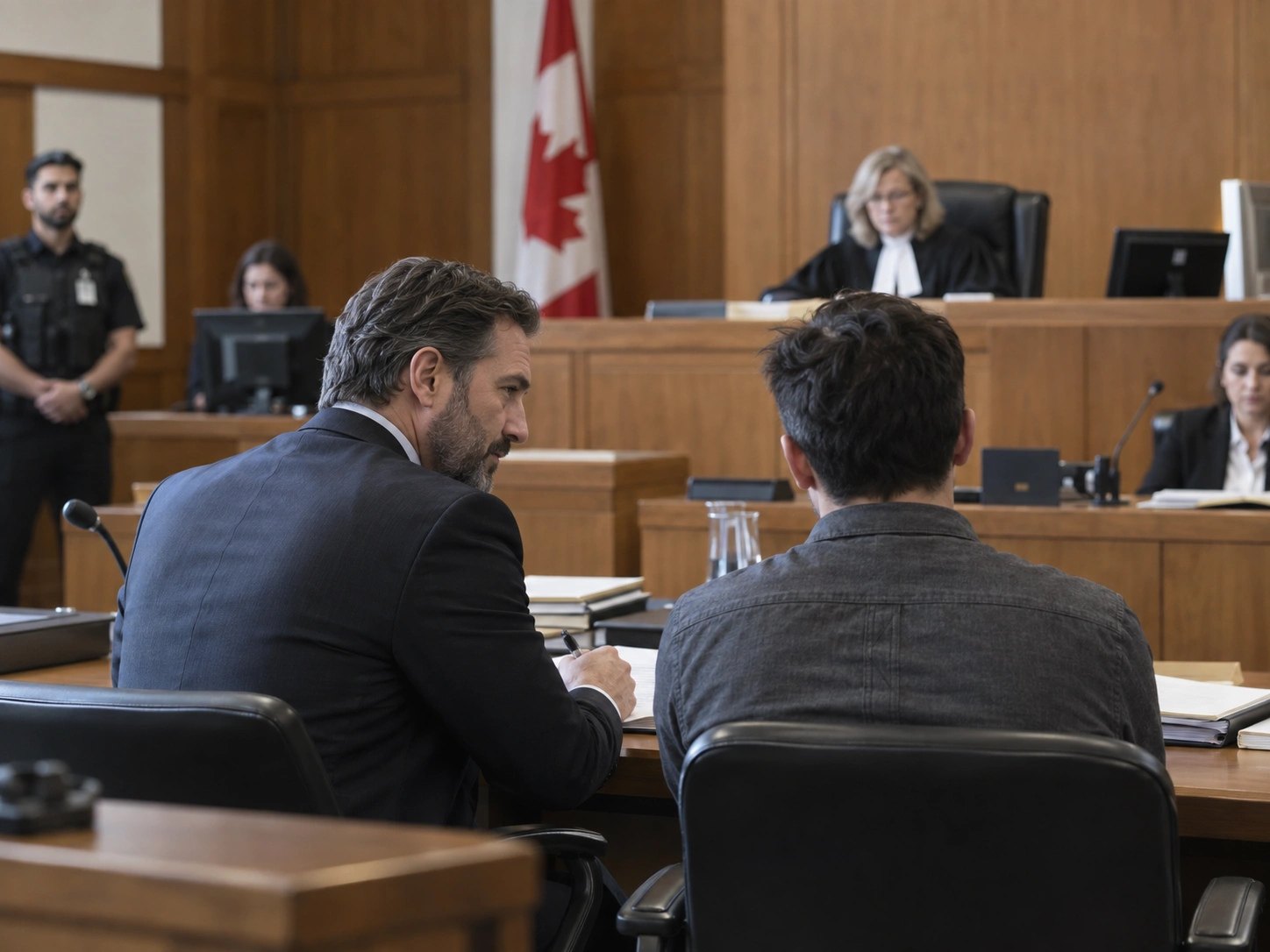
What Is a Breach of Bail Charge, Exactly?
A separate criminal offence for failing to follow a condition of your release. Breaching a release order falls under section 145(5) of the Criminal Code, and breaching an undertaking falls under section 145(4). Both are hybrid offences carrying up to two years where the Crown proceeds by indictment.
The part that catches people is independence. A breach charge stands entirely on its own, which means it survives even if the original charge is later withdrawn, stayed, or dismissed. People are regularly acquitted of the thing they were arrested for and convicted of breaching bail on it. The legal question is narrow: did a valid order exist, and were its terms not followed without lawful excuse.
Each condition is also treated as its own obligation. One evening can generate several charges if several conditions were broken, which is how a single lapse turns into a page of counts on an information. A criminal charge for an offence in Thornhill that already carried conditions can therefore multiply quickly, and the total on paper often looks far worse than what actually happened.
Does the Crown Have to Prove You Meant to Do It?
Yes, and this is the strongest defence available in most breach files. In R. v. Zora, the Supreme Court held that these offences require subjective fault, meaning the Crown must prove the accused knew about the condition and knowingly or recklessly failed to comply with it.
That overturned years of practice treating breach like a strict liability matter. It is no longer enough to show that a reasonable person would have complied, or that the accused failed to arrange their life properly around the terms. The court has to look at what this particular person actually knew and intended.
In practice, that opens real ground. Someone who genuinely misread an ambiguous condition, who was told something different by a bail supervisor, who could not read the order in English, or who was physically prevented from getting home before curfew is arguing about state of mind rather than about facts. The statute also excuses non compliance where there is a lawful excuse, which covers emergencies and circumstances outside the person’s control. Counsel will look at the procedural history too, since how the condition came to be imposed sometimes matters as much as how it was broken, and it is often the cleanest way to defend the charge.
Which Conditions Get People Charged in Thornhill?
Curfews and no contact terms, overwhelmingly. But Thornhill has a geographic problem that most of Ontario does not, and it produces breaches nobody intended.
Thornhill’s geography is the problem. The community straddles two municipalities. Everything west of Yonge Street is the City of Vaughan and everything east is the City of Markham, and the boundary runs straight down the middle of an ordinary residential street. A condition drafted as “not to attend the City of Markham” is perfectly clear in most of York Region. In Thornhill it means a person can breach by crossing the road to a plaza they have used for years, without ever leaving their own neighbourhood.
The conditions that generate the most charges locally:
- Area restrictions written by municipality rather than by address or radius. Ask for the wording to be fixed if you live near Yonge Street, because “the City of Vaughan” and “the City of Markham” are not intuitive boundaries here.
- Curfews, particularly for shift workers and anyone relying on transit north of Steeles. Compliance checks are real, and York Regional Police #2 District at 171 Major Mackenzie Drive West in Richmond Hill polices both sides of Thornhill.
- No contact conditions in domestic files, where the complainant initiates contact about children or belongings and the accused replies. Replying is still a breach, even to a message you did not start.
- Residence conditions, broken by staying somewhere else after an argument at the address on the order.
- Reporting conditions, missed because the person mixed up the date or the location.
- Driving prohibitions attached to an impaired driving release. Where the underlying charge is a DUI, a common condition is not to operate a motor vehicle, and driving anyway is a section 145 charge on top of the administrative licence suspension that already applies. That suspension runs separately and continues regardless of what happens with the breach. Careless driving and other Highway Traffic Act matters carry no bail conditions at all, since they are provincial rather than criminal, so no breach charge can arise from them.
Something worth knowing about #2 District specifically. It covers Richmond Hill along with the Thornhill portions of both Vaughan and Markham, so the officers who laid your original charge and the ones investigating the alleged breach frequently work from the same detachment with the same file. Disclosure tends to arrive as a continuation of the earlier investigation rather than as a fresh one.
Can a Breach Be Resolved Without a Criminal Record?
Often, yes. Section 523.1 of the Criminal Code created the judicial referral hearing precisely for this, and it is the outcome to aim for in most first breach files.
The gateway is harm. Where a criminal offence in Thornhill involving failure to comply caused no harm to a victim, no property damage, and no economic loss, the Crown may direct the matter to a judicial referral hearing rather than prosecute it. At that hearing, a judicial official who is satisfied the person failed to comply reviews the bail conditions themselves, with attention to the individual’s circumstances, and then has three options: take no action, release the person on new conditions, or order detention.
Take no action is a real outcome, not a theoretical one. Parliament built this process because breach charges were flooding the courts and falling hardest on people dealing with poverty, addiction, and mental health, a pattern the Supreme Court acknowledged directly in Zora. A Thornhill Breach of Bail Lawyer will usually push for a referral early, before the Crown has committed to prosecuting, since the conversation is much easier at that stage than after a trial date is set.
Other routes exist alongside it. Some breaches resolve by withdrawal once disclosure shows the condition was ambiguous. Others fold into the resolution of the main charge, where it is often possible to negotiate a reduced charge or a withdrawal of the breach in exchange for a resolution on the substantive matter. A peace bond sometimes ends both together. Negotiation of that kind works best early, before a trial date and its deadlines lock the file into a more rigid path, and a favourable result is far more achievable while the Crown still has room to move.
What Happens to the Bail You Are Already On?
It can be cancelled. Section 524 of the Criminal Code lets a justice revoke an existing release order where the person has breached or committed a fresh offence, and that triggers a new hearing on whether they should be released at all.
This is usually the more urgent problem. A reverse onus applies to someone alleged to have offended while already at large on another charge, which puts the burden on you to show why detention is not justified. Bail hearings in that posture are harder than the first one was. Since July 15, 2026, when the Bail and Sentencing Reform Act came into force, the ladder principle no longer applies to accused persons in a reverse onus position, so the court is not starting from the least restrictive option and working up.
Practically, that means the plan matters more than the explanation. Arriving with the same surety, the same address, and an apology is a weak position. Arriving with a second surety, a changed living arrangement, or a treatment placement addresses the concern the court now has. Bear in mind that the same July 2026 reforms generally disqualify anyone convicted of a serious offence in the past 10 years from acting as a surety, so a replacement needs checking before the plan is built around them.
What Does a Thornhill Breach of Bail Lawyer Do First?
Gets the exact wording of the condition, then the disclosure. A Thornhill Breach of Bail Lawyer starts with the order itself, because half of these files turn on what the condition actually said rather than on what anyone did.
Ambiguity is common and it is a defence, not an excuse. Conditions get drafted quickly in a busy bail court, and wording that made sense to the person who wrote it can be genuinely unclear to the person living under it. Where the term is vague, the subjective fault requirement from Zora does a great deal of work.
None of this is a template. The strategic choice between fighting the wording, seeking a referral, and folding the breach into the main resolution has to be personalized to the condition, the charge, and the person. The second job is protecting the release. Where a section 524 application is coming, the priority shifts to building a plan that keeps the person out of custody while the breach is dealt with, since almost everything gets harder from inside. The third job is timing: approaching the Crown about a judicial referral hearing early, and asking for the underlying condition to be varied so the same problem does not recur while the charge is outstanding.
What Are the Realistic Consequences?
For a first breach with no harm caused, frequently nothing that leaves a record. For a repeat breach, or one involving a domestic no contact term, considerably more.
A conviction under section 145 is an administration of justice offence, and among criminal code matters it carries weight well beyond the sentence. Courts treat it as evidence that you cannot be trusted to follow orders, which affects release on any future matter and often affects sentencing on the main charge. It is a criminal record that shows a compliance problem specifically, which employers and licensing bodies read differently from a single incident. A Thornhill Breach of Bail Lawyer will treat that risk as the real issue rather than focusing only on the sentence.
The wider consequences are the familiar ones. A record can affect employment screening, professional licensing, and admissibility at the United States border. For anyone who is not a Canadian citizen, an added conviction can change immigration status materially, which needs to shape strategy from the first week rather than after a plea. A second criminal charge on the record is read very differently from a first.
How We Handle Breach Files for Thornhill Clients
You get one lawyer on the file and a straight answer about where it is heading. We are a criminal defence law firm with a family law practice in the same office, and criminal matters of this kind are routine work rather than something we take on occasionally.
Breach files reward being responsive more than almost anything else in criminal law, because the window to reach the Crown before it commits to prosecuting is short. So we answer the phone, and we move on the disclosure and the referral conversation early. Defending clients through a breach also means being discreet about it. Most people who call are employed, have never been in trouble before, and want this dealt with quietly rather than fought loudly.
Providing criminal defence to Thornhill residents means knowing the ground: which conditions Newmarket tends to impose, how #2 District documents a compliance check, and where the wording usually goes wrong. Our legal services here run from a first phone call through to resolution, and our legal support extends to sureties and family members who are caught up in the same order. A criminal defence lawyer in Thornhill should be able to explain the legal process to you in plain language on the first call, and if we cannot, you should keep looking.
We are not selling legal solutions in the abstract. There is a condition, an allegation, and a court date. Our legal representation reaches across the Greater Toronto Area, with a second office in Toronto for matters that end up in the city, and we work to protect your rights at every stage of the case rather than only at the hearing. If you are facing charges anywhere in Thornhill or the wider GTA, call.
Frequently Asked Questions About Thornhill Breach of Bail Lawyer
Is breaching bail conditions a criminal offence in Ontario?
Yes. Breaching a release order is charged under section 145(5) of the Criminal Code and breaching an undertaking under section 145(4). Both are hybrid offences with a maximum of two years on indictment. The charge is independent of the original allegation and survives even if that allegation is later withdrawn.
Can a bail breach charge be dropped?
It can. Where no victim was harmed and there was no property damage or economic loss, the Crown may direct the matter to a judicial referral hearing under section 523.1 instead of prosecuting. At that hearing the court can take no action at all, impose new conditions, or detain. Withdrawal after disclosure review is also common.
What if I did not know I was breaching a condition?
That is a defence. In R. v. Zora, 2020 SCC 14, the Supreme Court held these offences require subjective fault, so the Crown must prove you knew of the condition and knowingly or recklessly failed to comply. Genuine misunderstanding of an ambiguous term, or a lawful excuse such as an emergency, can defeat the charge.
Where is a Thornhill breach of bail charge heard?
At the Ontario Court of Justice, 50 Eagle Street West in Newmarket, which handles criminal matters for all of York Region. Charges from both the Vaughan and Markham sides of Thornhill go there, laid by York Regional Police #2 District in Richmond Hill, which polices the whole Thornhill community.
Will I go back into custody if I breach?
Possibly. Under section 524 a justice can cancel the existing release order and hold a fresh hearing, and a reverse onus normally applies where the alleged offence happened while you were at large. Since July 2026 the ladder principle no longer assists accused persons in that position, so a strengthened release plan matters more than ever.
How do I choose the best lawyer for a breach charge in Thornhill?
There is no single best lawyer for every case. Ask whether they will approach the Crown about a judicial referral hearing, how quickly they can get disclosure, and who will actually attend at Newmarket. Be cautious of anyone advertising extensive experience, a testimonial promising results, or the best possible outcome, since Law Society of Ontario rules restrict such claims. Any firm you call should be licensed by the Law Society, whether it operates as a professional corporation or a partnership. Experienced criminal defence counsel will give you a realistic view of the outcome of your case rather than a guarantee, and a Thornhill criminal lawyer already familiar with that courthouse can usually move faster. Often the lawyer Thornhill families recommend is simply whoever returned the call first.
Does replying to a message from the complainant count as a breach?
Usually yes. A no contact condition binds you regardless of who initiated the contact, so replying to a text from the protected person is still a breach of your order, and any Thornhill Breach of Bail Lawyer will tell you the same thing. If children or property need to be arranged, ask for the condition to be varied rather than answering the message.
Get the Condition in Front of Someone Today
Call before you give a statement. Police will often ask you to explain what happened, and a helpful explanation is frequently the evidence that supplies the knowledge element the Crown would otherwise struggle to prove.
When you phone, we will ask what the condition said word for word, what you are alleged to have done, whether anyone was harmed, and whether you have been released or are being held. From that we can give you legal guidance on whether a judicial referral hearing is realistic, whether the wording is ambiguous enough to build a strong defence around, and what needs to happen before your next date. Everything you tell us is protected by solicitor-client privilege whether or not you retain us, and the free consultation carries no obligation.
Thornhill: 647-697-5975. Toronto: 647-588-3234. Reach us through our contact page, or come to the office at 7191 Yonge Street, Suite 310, Thornhill, Ontario L3T 0C4, a few minutes from either side of the municipal line. If a fresh bail hearing is now in play, our Thornhill bail lawyer page explains how that runs, and our bail hearing lawyer Ontario page covers release across the province. Where a surety is being asked to step in or step away, the Thornhill surety lawyer page sets out what that involves, and if release has already been refused, a Thornhill bail review lawyer can look at a section 520 application.
Talk it through with a lawyer today. No cost, no obligation, and the conversation stays confidential.