An impaired driving charge laid in Oakville is not heard in Oakville. The criminal case goes to the Ontario Court of Justice at the Milton Courthouse, 491 Steeles Avenue East. If the same stop produced a Highway Traffic Act ticket, that goes to a different court again, the Halton provincial offences court at 4085 Palladium Way in Burlington.
By then the province has usually acted already. A reading of 0.08 or more, a refused demand, or a poor result on a Drug Recognition Expert evaluation brings an immediate 90 day licence suspension and a seven day vehicle impoundment at the roadside. Nobody in Milton decides that part, and it runs whether or not you are ever convicted.
Kazandji Law has an office in Oakville at 466 Speers Road, and impaired driving cases are a regular part of our criminal practice. If you were charged, call 647-696-1468 before you decide anything about a plea, and say nothing more to the police about what you drank or where you had been. One call can tell you what matters in your file and what has to happen in the next few weeks.
At a glance
- Criminal court: Ontario Court of Justice, Milton Courthouse, 491 Steeles Avenue East, Milton
- Tickets from the same stop: Halton provincial offences court, 4085 Palladium Way, Burlington
- Local police: Halton Regional Police Service, 2 District, 95 Oak Walk Drive, Oakville
- Roadside penalty at 0.08 or more, or for a refusal: 90 day licence suspension, seven day impoundment and a $550 penalty
- Our Oakville office: 466 Speers Road, Oakville, Ontario L6K 3W9, 647-696-1468
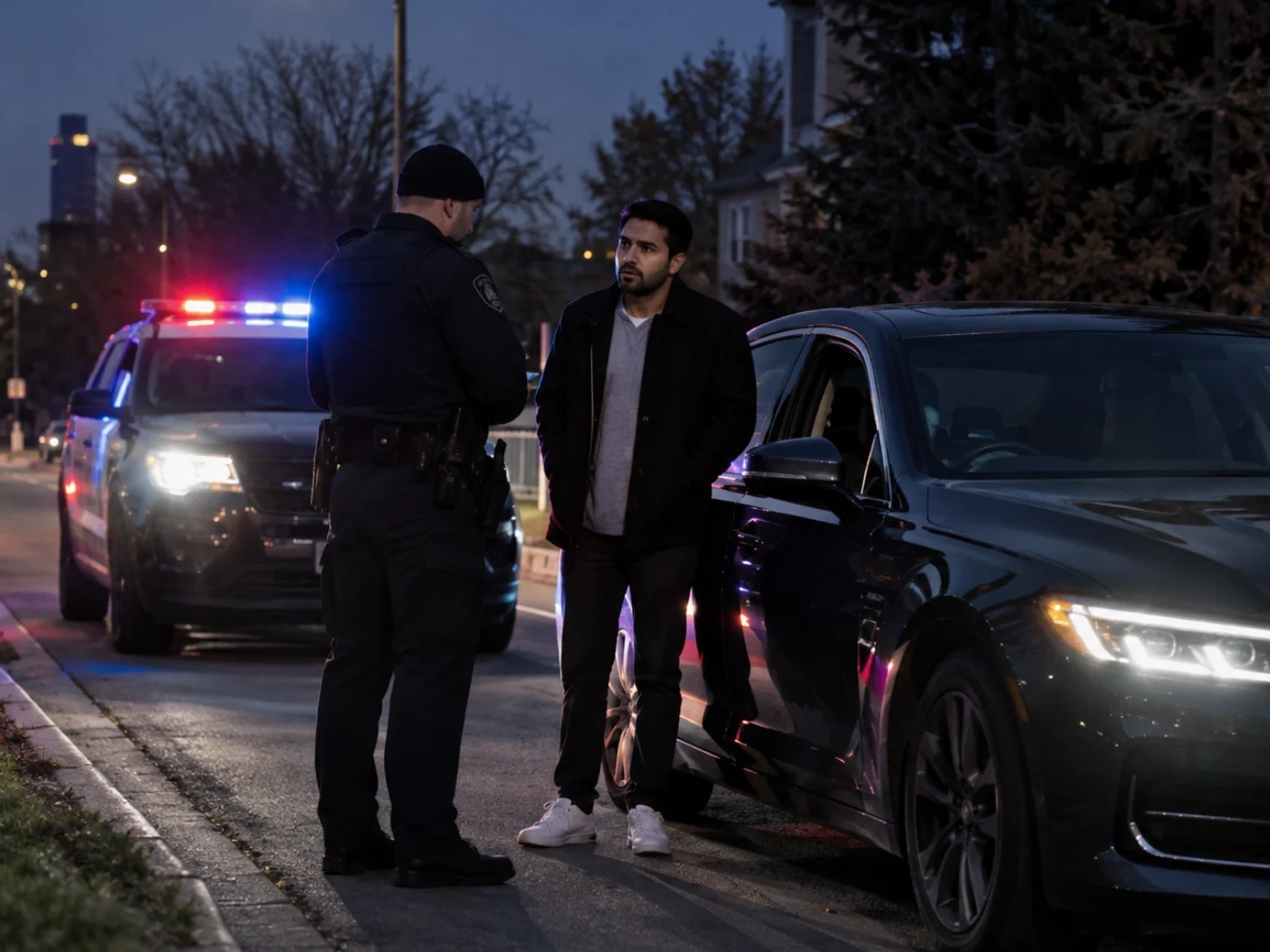
What happens in the first weeks after an Oakville DUI arrest?
Two separate systems start at once, and they run on very different clocks.
The provincial side is immediate. For a reading of 0.08 or more, a failed or refused demand, or a poor Drug Recognition Expert evaluation, Ontario imposes a 90 day suspension, a seven day impoundment and a $550 penalty, plus a licence reinstatement fee. A first occurrence also means an eight hour education course. A second means a 16 hour treatment program, and a third adds an ignition interlock condition for six months.
The criminal side is slow. If you were released, your paperwork sets a first appearance date in Milton. From there the file moves through disclosure, discussions with the Crown and, if it does not resolve, a trial date that can be many months away. The 90 day suspension often ends while the charge is still open. That does not mean the charge has gone away.
Which court hears an Oakville impaired driving charge?
The Ontario Court of Justice at the Milton Courthouse, 491 Steeles Avenue East, which is the court’s location for Halton Region. Impaired operation, over 80 and refusing a demand are all Criminal Code offences, under sections 320.14 and 320.15, so they go there.
Tickets are different. Careless driving, stunt driving and the zero tolerance charges laid against young and novice drivers fall under the Highway Traffic Act, and in Halton those are heard at 4085 Palladium Way in Burlington. One stop on Trafalgar Road can leave you with two court dates in two different towns, and neither of them is Oakville. Our driving offence page explains how the ticket side works.
Local policing in Oakville is done by the Halton Regional Police Service, whose 2 District station is at 95 Oak Walk Drive. The officer’s notes, the breath test records and any booking video come from the police service that laid the charge, and that material is what a defence is built on.
You will not always have to go to Milton in person. Many routine appearances can be handled by your lawyer, which matters when you have just lost your licence.
What are the penalties for a first DUI conviction in Ontario?
The Criminal Code sets minimums that a judge cannot go below. For a first offence the minimum is a $1,000 fine. If the charge is over 80 and the reading was 120 to 159 milligrams of alcohol in 100 millilitres of blood, the minimum rises to $1,500, and at 160 or more it is $2,000. Refusing a breath or blood demand carries a minimum fine of $2,000 on its own. That surprises people who refused because they thought it was the safer choice. Our breath sample refusal page covers that charge in more detail.
A first conviction also brings a driving prohibition of at least one year and up to three years. A second offence carries at least 30 days in jail and a third at least 120 days. The maximum on indictment is 10 years.
Ontario adds its own layer. For offences on or after July 1, 2026, a first conviction means a provincial licence suspension of at least one year, a mandatory education or treatment program, and an ignition interlock device for at least a year. When the interlock comes off, what Ontario calls a P condition applies for at least six months, so there can be no alcohol and no drugs in your system when you drive. A second conviction within 10 years means at least three years of suspension and three years of interlock. Our page on the 2026 impaired driving changes sets out what changed this year.
A first conviction at a glance
| WHAT HAPPENS | FOR A FIRST CONVICTION | WHERE IT COMES FROM |
|---|---|---|
| Minimum fine | $1,000, or $1,500 at 120 to 159 mg, $2,000 at 160 mg or more, and $2,000 for a refusal | Criminal Code, section 320.19 |
| Court driving prohibition | 1 to 3 years | Criminal Code, section 320.24 |
| Ontario licence suspension | At least 1 year, for offences on or after July 1, 2026 | Ontario |
| Ignition interlock | At least 1 year, then at least 6 months with no alcohol and no drugs while driving | Ontario |
| Criminal record | Yes. A record suspension can be applied for 5 years after a summary sentence is finished, or 10 years after an indictable one | Criminal Records Act |
What if you blew in the warn range, or you are a young driver?
A reading between 0.05 and 0.079 is not a criminal offence by itself. It brings provincial penalties: a seven day suspension, an eight hour course and a $250 penalty the first time, 14 days and $350 the second time, and 30 days, a treatment program, six months of interlock and $450 the third time.
A criminal charge can still follow a lower reading if the officer has other evidence that your ability to drive was impaired. Impaired operation does not depend on a number.
Drivers aged 21 and under, and anyone holding a G1, G2, M1 or M2 licence, must have no alcohol and no drugs in their system at all. On top of the penalties every driver faces, they get their own set: a seven day suspension, a $250 penalty and a fine of $60 to $1,000 if convicted the first time, rising for a second and third time. Those charges go to the Burlington provincial offences court rather than Milton.
What does a DUI lawyer look for in the police file?
Mostly the officer’s conduct and the order in which things happened. Impaired driving cases turn on procedure at least as often as on the reading. The material that matters:
- Why you were stopped, and what grounds the officer wrote down for each demand.
- The times: when you stopped driving, when each demand was made and when each sample was taken.
- The records for the breath instrument and for the qualified technician who ran it.
- Whether you were told about your right to a lawyer under section 10(b) of the Charter, and whether you actually got to speak to one before the testing.
- The booking video, which sometimes shows a calmer, steadier person than the notes describe.
One thing has changed for good. An officer who has an approved screening device and has lawfully stopped you can demand a roadside sample without suspecting that you have been drinking. Arguments about that first roadside demand are weaker than they once were. What happened after it is still open to challenge.
Can an impaired driving charge in Halton be defended?
Often, though rarely the way television suggests. The realistic outcomes are a withdrawal or acquittal after a Charter problem, a resolution on a lesser Highway Traffic Act charge such as careless driving, or a guilty plea built to limit the damage.
Charter applications are the usual route. Sections 8, 9 and 10(b) protect you against unreasonable search, arbitrary detention and the denial of a lawyer. When a breach is proven, the judge can exclude the evidence, and without the breath readings many over 80 cases cannot go ahead.
A plea to careless driving avoids a criminal record, which is why so many people want it. Whether the Crown will consider it depends on the reading, the driving, the strength of the evidence and your record. Nobody can promise it at the start, and you should be wary of anyone who does.
Should you plead guilty early to get back on the road sooner?
Sometimes. It is a real choice with a real cost either way. Ontario’s Reduced Suspension with Ignition Interlock Conduct Review Program lets eligible drivers back on the road much sooner. In the fastest stream, a first offender who pleads guilty and is convicted, sentenced and prohibited within 90 days of the offence serves a licence suspension of at least three months, followed by at least nine months with an interlock. Other first offenders can qualify for a minimum six month suspension followed by 12 months with an interlock. The program only covers alcohol impaired driving convictions, and it has other conditions.
The trade is simple to state. Moving fast gets you driving sooner. It also gives up the chance to test the police file, argue the Charter, or resolve the case without a criminal record. Ninety days goes quickly, and you may not have seen the whole file by then. If your job depends on driving and the file looks clean, the early plea can be the right call. If there is a real Charter issue, it is usually an expensive mistake. Our page on getting your licence back after a DUI walks through the reinstatement steps.
How does a DUI conviction affect your record, travel and immigration status?
A conviction is a criminal record, and the record lasts long after the licence problems end. Employers and licensing bodies ask about it, and crossing into the United States becomes less predictable.
A record suspension, still often called a pardon, is available eventually. The wait starts once the whole sentence is finished, fines and probation included, and it is five years for a summary conviction and 10 years for an indictable one. The Parole Board of Canada says a driving prohibition does not have to expire before that waiting period begins.
For anyone who is not a Canadian citizen, this is the most serious part. Impaired driving carries a maximum of 10 years, which makes a conviction serious criminality under section 36(1) of the Immigration and Refugee Protection Act. Section 36(3) treats it that way even when the Crown proceeds summarily. Permanent residents and people on work or study permits need that built into the defence from the first week.
What does an Oakville DUI lawyer cost?
Less than most people fear, and more than a traffic ticket. Impaired driving work is usually quoted in stages, covering the disclosure review and resolution, with a separate quote if the case goes to trial. You should know the number before you commit.
Compare it with the whole cost of a conviction rather than the fine alone: the minimum fine, at least a year without a licence, the interlock, education or treatment fees, years of higher insurance, and a record that follows you to the border.
If money is the barrier, ask about Legal Aid Ontario, which can issue a certificate to pay for a lawyer if you qualify financially. Our first consultation is free. If your file has no realistic defence, we will tell you, and we will not bill you for a fight with nothing behind it.
How we handle impaired driving cases from our Oakville office
One lawyer stays with your file from the first call to the last court date. We work from 466 Speers Road in Oakville and we appear at the Milton Courthouse regularly. Kazandji Law was founded by Fadi Matthew Kazandji, and the firm has four offices: Oakville, Toronto, North York and Thornhill.
The early work is where most of the value is. We get the disclosure moving, read the officer’s notes against the video and the breath records, and then tell you plainly whether there is something to argue. If there is not, we say so and work toward the outcome that costs you least, whether that is the interlock program, a lesser charge, or a sentencing position that protects your work.
We also look past the charge itself, at your licence, your insurance, your record and, where it applies, your immigration status. If your charge was laid in Toronto instead, see our Toronto impaired driving page.
Frequently Asked Questions
Is DUI the correct legal term in Ontario?
Not technically. DUI is an American term that most people use anyway. The Criminal Code speaks of impaired operation and of operation with a blood alcohol concentration of 80 or more, both under section 320.14, and of refusal under section 320.15. Everyone at the Milton Courthouse will know what you mean.
Where is an Oakville impaired driving charge heard?
At the Ontario Court of Justice in the Milton Courthouse, 491 Steeles Avenue East, Milton. Highway Traffic Act tickets from the same stop go to the Halton provincial offences court at 4085 Palladium Way in Burlington.
How long will I lose my licence for a first DUI in Ontario?
The roadside suspension is 90 days and starts right away. On conviction, the court must prohibit you from driving for at least one year, and for offences on or after July 1, 2026 Ontario also suspends your licence for at least a year and requires an ignition interlock. Eligible first offenders can shorten the time off the road through the province’s reduced suspension program.
Can a DUI charge be reduced to careless driving?
Sometimes. Where the evidence has weaknesses, the Crown may agree to resolve the case with a Highway Traffic Act offence such as careless driving, which avoids a criminal record. It depends on the reading, the driving, the evidence and your record, so it is decided case by case.
I blew in the warn range. Will I have a criminal record?
Not from the warn range itself. A reading between 0.05 and 0.079 leads to provincial penalties, starting with a seven day suspension and a $250 penalty. A criminal charge can still be laid if the officer has other evidence that your ability to drive was impaired.
Will a DUI conviction affect my immigration status?
It can. Impaired driving has a maximum sentence of 10 years, so a conviction counts as serious criminality under the Immigration and Refugee Protection Act, even when the Crown proceeds summarily. Permanent residents and temporary residents should raise their status with their lawyer at the start.
How soon should I call a lawyer after an Oakville DUI charge?
Before your first court date and before any decision about a plea. The fastest interlock stream needs a plea, sentence and prohibition within 90 days of the offence, so the useful advice comes early. Our Oakville office is at 466 Speers Road, 647-696-1468.
Talk to a lawyer before you decide how to plead
Most bad outcomes in these cases start with a decision made before anyone read the police file. When you call, we will ask what your readings were, whether you refused, how the stop happened, whether you were offered a call to a lawyer, and whether you have any alcohol related driving history in the last 10 years. From there we can tell you whether the file has something worth challenging and whether the early interlock route makes sense for you.
The consultation is free and confidential, and there is no obligation. Oakville office: 466 Speers Road, Oakville, Ontario L6K 3W9, 647-696-1468. You can also reach us through our contact page.