
Thornhill Breath Sample Refusal Lawyer
Being charged with refusing to provide a breath sample does not get you out of anything. Refusal to provide a sample when police make the demand is a criminal offence under section 320.15 of the Criminal Code of Canada, so refusing a breath sample is a criminal matter rather than a way around one, and declining the test believing you were not impaired changes nothing about that. The minimum fine for a first refusal conviction is $2,000 under subsection 320.19(4) of the Criminal Code, which is double the $1,000 minimum for a first conviction for driving over 80. The driving prohibition is the same, the criminal record is the same, and the charge is prosecuted the same way.
The harder truth is that you can be convicted while completely sober. A refusal charge does not require any proof of drinking and driving at all, because the offence is the refusal itself rather than impairment. People who decline the test believing there will be no evidence against them have simply handed the Crown a cleaner case.
None of that means the charge is indefensible. It means the defence lives somewhere else: in whether the demand was lawful, whether you understood it, and whether you had a reasonable excuse. A Thornhill Breath Sample Refusal Lawyer can look at the officer’s notes and tell you fairly quickly which of those is worth pursuing.
Is Refusing a Breathalyzer Worse Than Blowing Over?
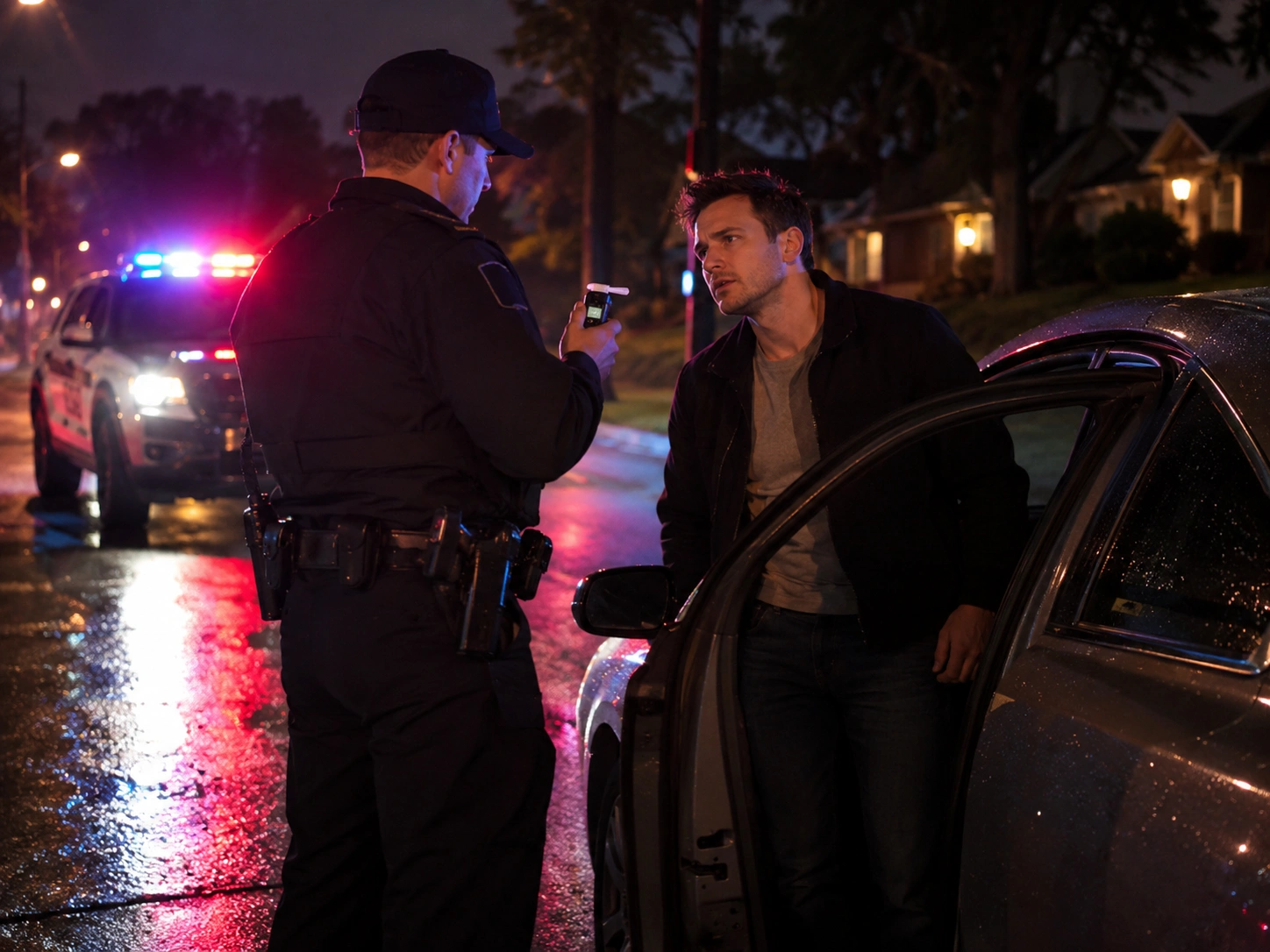
On the numbers, yes, at least for a first offence. Refusing a breathalyzer Thornhill officers have lawfully demanded carries a $2,000 minimum fine, while a first conviction for a reading between 0.08 and 0.119 carries $1,000.
Everything else lines up with an impaired driving conviction rather than sitting below it, with a refusal conviction carrying the same penalties as any other DUI charge. Blood alcohol concentration never enters into it, since there is no reading to argue about. A first refusal conviction brings a mandatory driving prohibition of at least one year. A second conviction carries a minimum of 30 days in jail and a third carries 120 days. The offence is hybrid, and on indictment the maximum is ten years.
The provincial consequences are identical too. A driver who refuses faces an immediate 90 day administrative licence suspension and a seven day vehicle impoundment at the roadside, imposed by the province and unaffected by how the criminal charge later resolves. Ontario’s January 2026 changes apply as well, including the extension of the repeat offender look back period from five years to ten.
So the calculation people make in the moment, that refusing is safer than blowing, is backwards. What refusing actually removes is the chance of a low reading, and the chance of attacking the instrument.
What Does the Crown Have to Prove?
Four things, and each is a place where a case can fall apart. Section 320.15(1) of the Criminal Code makes it an offence to fail or refuse to comply with a demand, without reasonable excuse, knowing that the demand was made.
The wording is that a person must fail or refuse to comply with a lawful demand, without a reasonable excuse, knowing the demand was made. Broken into its parts, the Crown must establish:
- That a demand was actually made, whether for a roadside screening sample, an evidentiary breath sample, blood, or physical coordination tests.
- That you knew a demand had been made. Where the officer’s words were unclear, or where a language barrier meant the demand was not understood, this element is genuinely in issue.
- That the demand was lawful. For a roadside screening demand this means you were lawfully stopped and the officer had the legal authority to make the demand, with an approved screening device available. For an evidentiary demand, meaning a demand for breath samples on an approved instrument at the station, it means the officer had reasonable grounds to believe an impaired driving offence had been committed.
- That you refused or failed to provide the sample. This covers outright refusal and also failing to provide a suitable sample after several attempts, which is where a medical condition often arises. Failing to comply is treated the same as saying no outright.
The lawfulness of the demand is the element that most often decides these files. An unlawful demand cannot found a refusal conviction, so the analysis frequently turns on what the officer knew and had available at the moment the words were spoken.
What Counts as a Reasonable Excuse?
Something that made compliance genuinely impossible or unreasonable, and courts read it narrowly. A physical inability to provide a sufficient sample is the clearest example.
A genuine inability to provide a breath sample due to a documented condition is the strongest version of this defence. What has been accepted includes chronic obstructive pulmonary disease and other conditions affecting lung capacity, serious injuries from a collision such as broken ribs, and severe panic or anxiety disorders where the evidence supports a genuine inability rather than reluctance. Medical documentation matters enormously in these cases, and it should be gathered early rather than assembled the week before trial.
What is not accepted is the longer list. A decision to refuse to provide a sample out of fear of what the reading might show is not a reasonable excuse. Nor is nervousness, nor a belief that the officer was being unfair, nor simply not appreciating how serious refusing would turn out to be.
One misconception deserves particular attention because it produces so many charges. Asking to speak with a lawyer before providing a roadside screening sample is not a reasonable excuse for refusing. There is no right to a lawyer before the roadside screening test, though the opportunity to contact a lawyer does arise before the evidentiary breath tests at the station. Drivers who say they will blow only after calling a lawyer are routinely treated as failing to provide a sample, and they are usually surprised.
There is also a live legal question about who has to prove the excuse. In R. v. Goleski, 2015 SCC 6, the Supreme Court held that the accused bears a persuasive burden to establish a reasonable excuse on a balance of probabilities, based on the wording of section 794(2) of the Criminal Code. That provision was repealed in 2018, and there is now authority suggesting that where a reasonable excuse has an air of reality, the Crown bears the onus of disproving it. Anyone running this defence should be alive to the argument rather than assuming Goleski settles it, and a Thornhill Breath Sample Refusal Lawyer should raise it where the excuse has an air of reality.
Can Police Demand a Sample Without Suspecting Anything?
For alcohol, yes. Subsection 320.27(2) allows an officer who has lawfully stopped a driver and has an approved screening device in their possession to demand a breath sample without any suspicion that the driver has been drinking.
That power, usually called mandatory alcohol screening, lets an officer demand a roadside breath sample from any driver they have lawfully pulled over, and it is why refusal charges have become more common. Providing a sample at the roadside is a screening step; the evidentiary breath testing that follows at the station produces the readings used in court. Before it existed, an officer needed reasonable suspicion under subsection 320.27(1), and the absence of grounds was a standard line of attack. Now the defence usually has to look elsewhere, though not always: the device still has to be lawfully in the officer’s possession and the stop itself still has to be lawful.
Drugs are different, and the contrast is useful to understand. There is no mandatory drug screening in Canada. An oral fluid demand requires reasonable suspicion that a drug is in the driver’s body, so a refusal charge arising from a drug screening demand can still be challenged at the suspicion stage in a way that an alcohol refusal generally cannot.
What Does a Thornhill Breath Sample Refusal Lawyer Look For?
The exact words used, and the sequence they were used in. A Thornhill Breath Sample Refusal Lawyer works through the officer’s notes line by line, because the case usually turns on precisely what was said, when, and whether the driver could reasonably have understood it.
The point of that review is to determine whether the demand for a breath sample was lawful and whether what happened next amounts to a refusal at all. The areas that repeatedly produce results:
- Whether the demand was properly communicated, particularly where English is not the driver’s first language.
- Whether the approved screening device was actually present and functioning when the demand was made, since a demand without a device available can be unlawful.
- Whether the demand was for breath samples on an approved instrument or for a blood sample, and whether the correct procedure was followed for the type of sample sought.
- Whether the driver was given a genuine opportunity to comply, or whether the officer declared a refusal after a single unsuccessful attempt. Failing to provide a breath sample is not the same as refusing to provide one, and the notes do not always distinguish them.
- The timing between the stop, the demand, and the alleged refusal, which is often recorded imprecisely and sometimes contradicted by video.
- Whether rights to counsel under section 10(b) of the Charter were given and facilitated before the station procedures.
- Any medical history that could support a reasonable excuse, including conditions the driver may not have thought to mention, since two failed attempts at providing breath samples can look identical to refusal on paper.
Where the evidence is strong, a lawyer may negotiate a resolution that helps you avoid a criminal record, such as a plea to a Highway Traffic Act offence, and your case may resolve without a trial at all. Fighting a refusal charge and resolving one are both legitimate routes, and the choice should follow the disclosure rather than precede it. Booking video matters more here than in most files. Someone charged with refusing a breath sample and described in the notes as belligerent sometimes appears on video confused, unwell, or trying repeatedly to provide breath samples that the instrument would not accept.
Where Is a Thornhill Refusal Charge Heard?
At the Ontario Court of Justice, 50 Eagle Street West in Newmarket, which handles criminal matters for all of York Region. A refuse breath sample charge Thornhill drivers receive goes there whether the stop happened on the Vaughan side of Yonge Street or the Markham side.
York Regional Police #2 District at 171 Major Mackenzie Drive West in Richmond Hill polices Thornhill on both sides of Yonge along with Richmond Hill itself. That detachment produces the notes, the demand documentation, the screening device records, and the station video, and requesting the complete file rather than the summary is the first practical step in any refusal case.
Newmarket is roughly a 40 minute drive north. Most routine appearances can be handled by counsel without you attending, which matters when your licence is already suspended and getting there is a problem in itself.
Does It Matter Where You Were Stopped?
A criminal record, and the effects follow the record rather than the driving. This is the part that outlasts everything else.
Employment screening picks it up, professional licensing bodies ask about it, and travel to the United States becomes uncertain because American officers decide admissibility on their own terms. A record suspension is available eventually, but the wait after completing the sentence is five years for a summary conviction and ten years for an indictable one.
Immigration is the most serious exposure. Refusal is a hybrid offence with a maximum of ten years on indictment, so a conviction prosecuted that way can be treated as serious criminality under section 36(1) of the Immigration and Refugee Protection Act. Permanent residents and temporary residents should raise their status at the first meeting, because it changes how the whole file should be run.
Insurance is the cost people feel soonest. A refusal conviction is treated as a major conviction and typically prices a driver into the high risk market for years.
What Does a Thornhill Breath Sample Refusal Lawyer Cost?
Quoted by stage before you commit, and usually smaller than the conviction itself. A Thornhill Breath Sample Refusal Lawyer will normally price the disclosure review and resolution first, with trial fees set out separately if the file goes that way.
Weigh it against the whole number rather than the fine alone. A conviction carries the $2,000 minimum, a year off the road, an ignition interlock device requirement before reinstatement, an insurance increase measured in thousands, and a criminal record that follows you across the border. Refusing a breath sample in Ontario is treated as seriously as blowing over, so whether you look for a refuse breath sample lawyer, an impaired driving lawyer, or a criminal defence lawyer generally, the person you want is one who handles these files regularly. Legal Aid Ontario certificates are available for people who qualify financially, and duty counsel can assist at Newmarket with early appearances.
While you wait, a few things help:
- Write down exactly what the officer said and what you said back, along with timings, before the memory fades.
- Collect any medical records relating to breathing, lung capacity, recent injuries, or anxiety disorders.
- Note your court date and do not miss it, since failing to appear is a separate charge.
- Do not drive while your licence is suspended, because driving under suspension adds its own penalties on top.
- Say nothing further about the night to anyone other than your lawyer.
Frequently Asked Questions
Is refusing to provide a breath sample a criminal offence in Ontario?
Yes. Failure to provide a sample on a lawful demand is a criminal offence under section 320.15(1) of the Criminal Code, whether you refuse outright or fail to blow properly. Declining to provide a sample is a criminal offence even where no alcohol is involved. It is a hybrid offence carrying a maximum of ten years on indictment, and a first conviction brings a minimum $2,000 fine and a driving prohibition of at least one year.
Is the penalty for refusing worse than for failing the test?
For a first offence, the minimum fine is higher. Refusal carries a $2,000 minimum under subsection 320.19(4), while a first conviction for a reading between 0.08 and 0.119 carries $1,000. The driving prohibition, the criminal record, and the immigration exposure are the same either way.
Can I be convicted of refusing if I was not drinking?
Yes. The offence is the refusal itself rather than impairment, so the Crown does not need to prove you had consumed alcohol. Sobriety is not a defence to a refusal charge, though it may be relevant to sentencing and to whether a reasonable excuse existed in the circumstances.
Can I ask to speak to a lawyer before blowing?
Not before the roadside screening test. There is no right to counsel at that stage, and saying you will blow only after calling a lawyer is routinely treated as a refusal. The right to counsel does apply before the evidentiary breath tests at the police station, and it should be exercised there.
Where is a Thornhill refusal charge heard?
At the Ontario Court of Justice, 50 Eagle Street West in Newmarket, which serves all of York Region. Charges from both the Vaughan and Markham sides of Thornhill go there, investigated by York Regional Police #2 District in Richmond Hill. Highway Traffic Act tickets are dealt with in a separate provincial offences court.
What medical conditions count as a reasonable excuse?
Conditions that genuinely prevent providing a sufficient sample, such as chronic obstructive pulmonary disease, reduced lung capacity, serious injuries from a collision, or a severe panic disorder. Documentation is essential, and courts apply the test narrowly. Fear of the result, nervousness, or a language misunderstanding alone are generally not enough.
Have A Thornhill Breath Sample Refusal Lawyer Read the Notes Before You Decide
Contact a Thornhill Breath Sample Refusal Lawyer before you assume this charge is hopeless. Anyone facing a refusal charge should know that many people are charged with impaired driving as well, and where an impaired driving charge sits alongside the refusal the two are dealt with together. Refusal files look bad on the summary and often look very different once the notes and the video are read side by side.
When you phone, we will ask where you were stopped, what the officer said, how many attempts you made, whether you asked to speak to a lawyer, and whether you have any medical condition affecting your breathing. From there we can usually tell you whether the demand looks lawful, whether a reasonable excuse is realistically available, and what the range of outcomes looks like. Everything you tell us is protected by solicitor-client privilege whether or not you retain us, and the first conversation is free.
Thornhill: 647-697-5975. Toronto: 647-588-3234. Reach us through our contact page, or come to the office at 7191 Yonge Street, Suite 310, Thornhill, Ontario L3T 0C4, minutes from either side of the municipal line. Our Thornhill DUI lawyer page covers what happens when a sample is provided, and where the demand was for a drug screening rather than breath, our Thornhill drug DUI lawyer page explains the different suspicion requirement. For the province wide picture, see our driving offence lawyer Ontario page, and our Thornhill criminal defence lawyer page explains how criminal files run at Newmarket generally.
This page is provided for informational purposes and does not constitute legal advice. Every case turns on its own facts, and you should speak with a lawyer about your specific situation before making any decision.
Talk it through with a lawyer today. No cost, no obligation, and the conversation stays confidential.