

Thornhill Drug DUI Lawyer
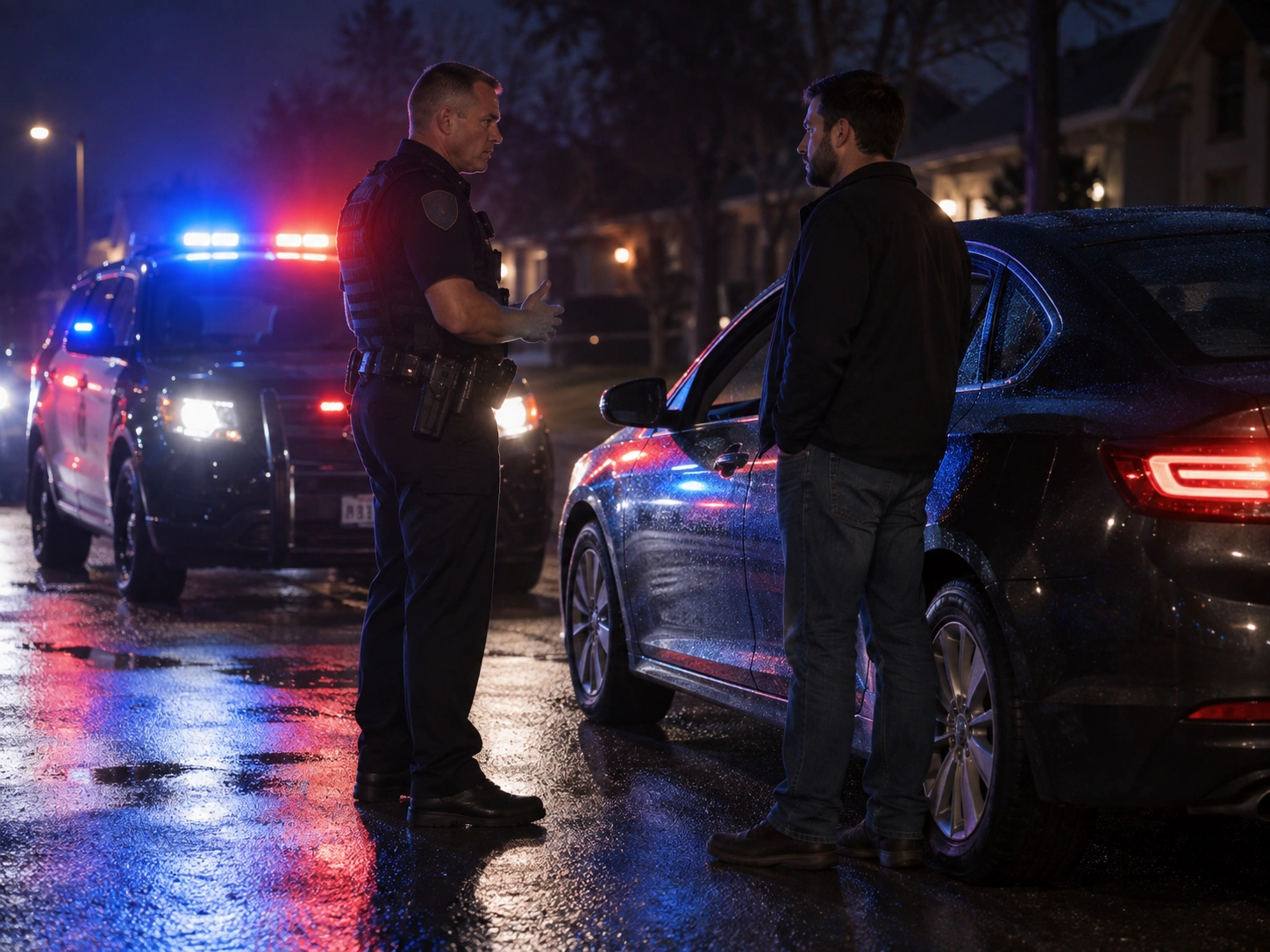
Drug impaired driving is charged under the same section as alcohol, but one crucial rule works in your favour. Police can demand a breath sample from any lawfully stopped driver without suspecting anything at all. They cannot do that for drugs. An oral fluid demand requires reasonable suspicion that a drug is in your body, based on objectively discernible facts, and if that threshold was not met the whole investigation may be challengeable.
That single difference is where most of these cases are won or lost. It is also why the officer’s notes matter enormously here, because the grounds have to be written down and they have to hold up.
If you are facing a DUI of any kind, contact a lawyer immediately and say nothing about what you consumed or when. Technically the paperwork will say impaired operation rather than DUI, since DUI and impaired driving describe the same thing in everyday speech. A Thornhill Drug DUI Lawyer can look at the notes, the screening result, and the evaluation and tell you within a call or two whether the suspicion behind the demand is worth attacking.
What Are the Actual THC Limits in Canada?
Three separate offences, set out in section 320.14 of the Criminal Code with the numbers fixed by the Blood Drug Concentration Regulations. The level you register decides which one you face, and the gap between them is large.
- Between 2 and less than 5 nanograms of THC per millilitre of blood is a straight summary conviction offence under subsection 320.14(4), carrying a maximum fine of $1,000 and no jail.
- Five nanograms or more per millilitre is a hybrid offence under paragraph 320.14(1)(c), with the full mandatory minimum penalties and, on indictment, a maximum of ten years.
- A combination of 50 mg of alcohol per 100 mL of blood together with 2.5 nanograms or more of THC is a hybrid offence under paragraph 320.14(1)(d). Note that the alcohol limit is 80 mg on its own, so two amounts that would each be lawful separately become an offence together.
For most other drugs there is no threshold at all. Cocaine, methamphetamine, LSD, psilocybin, ketamine and 6-MAM carry zero tolerance, so any detectable amount in the blood is enough.
The measurement window matters too. All of these offences are framed as having the prohibited concentration within two hours after you stopped driving, not at the moment you were behind the wheel. A Thornhill Drug DUI Lawyer will check which threshold your reading actually crossed, because the difference between the summary offence and the hybrid one is the difference between a fine and a criminal record with a driving prohibition attached.
Why Can Police Test You for Alcohol Without Suspicion but Not for Drugs?
Because Parliament authorised mandatory screening for alcohol only. Subsection 320.27(2) lets an officer who has lawfully stopped you demand a preliminary breath sample on a roadside breathalyzer with no suspicion whatsoever. No equivalent power exists for drugs, which is why an alcohol DUI charge and a drug criminal charge start from very different places.
Before an officer can demand an oral fluid sample on an approved drug screener, they must reasonably suspect that a drug is in your body. Courts have held that this suspicion must rest on objectively discernible facts, and the ones that appear in these files are familiar: red eyes, muscle tremors, agitation, unusual speech, the smell of cannabis, or an admission.
This is the practical difference between an alcohol file and a Thornhill drug impaired charge. In an over 80 case there is often nothing to attack at the demand stage. In a drug case, the entire investigation depends on grounds that were formed in a few seconds at the roadside and written up afterwards, and those grounds are examinable in a way that mandatory alcohol screening is not.
What Happens During a Roadside Drug Stop and a DRE Evaluation?
It runs in stages, and each stage requires its own legal threshold. Knowing the sequence tells you where the pressure points are.
An officer with reasonable suspicion can demand a Standardized Field Sobriety Test under subsection 320.27(1) or an oral fluid sample on an approved drug screening device. A positive screen does not prove an offence. It gives the officer information that can help build reasonable grounds to believe an offence was committed.
If those grounds form, subsection 320.28(2) allows a demand that you submit to an evaluation by a trained evaluating officer, commonly called a Drug Recognition Expert, or provide blood samples, or both. The evaluation is a structured protocol conducted at the station involving physical checks, eye examinations, and divided attention tests, and it ends with the evaluating officer forming an opinion about which class of drug is causing impairment. Blood is then usually taken to confirm the concentration.
Two things people get wrong here. You do not have the right to speak with a lawyer before the roadside tests, but you do have that right before the station procedures, and it should be exercised. And refusing any of these demands without a reasonable excuse is itself an offence under subsection 320.15(1), carrying penalties comparable to the charge you were avoiding.
What Does a Thornhill Drug DUI Lawyer Look For in the Disclosure?
The grounds, then the science, in that order, because that is the sequence you have to defend against. A Thornhill Drug DUI Lawyer starts with what the officer actually recorded about why they suspected drugs, because if that foundation fails, everything built on top of it comes under attack.
After the grounds, the areas that repeatedly produce results:
- Whether the observations in the notes genuinely support suspicion, or whether they are equally consistent with fatigue, allergies, anxiety, or a medical condition.
- The reliability of the oral fluid screening result, since these devices vary in sensitivity and a positive screen indicates presence rather than impairment.
- Whether the evaluation was conducted properly and in sequence, and whether the evaluating officer’s opinion is supported by the recorded observations rather than asserted.
- The blood draw itself, including who took the sample, whether it was taken as soon as practicable, and how it was stored and analysed.
- Whether the right to counsel under section 10(b) of the Charter was given without delay before the station procedures and genuinely facilitated.
The deeper scientific problem helps too. Blood THC concentration does not track impairment the way blood alcohol does. THC levels peak and fall quickly, and regular users can carry detectable THC long after any effect has passed, which is why the per se limits are set by regulation rather than derived from an impairment curve. That gap is fertile ground in a contested case involving cannabis. It also creates an opportunity in negotiation, since a Crown facing a weak impairment narrative may agree to negotiate a reduced charge such as careless driving under the Highway Traffic Act, which avoids a criminal record altogether. Not every case supports that resolution, but it is worth asking about early.
Is Medical Cannabis a Defence to Drug Impaired Driving?
No, and this is the misunderstanding that lands the most people in trouble. A valid medical authorisation permits you to possess and use cannabis. It does not permit you to drive with THC in your blood above the prescribed limit.
The per se offences are drafted around concentration, not around whether your use was lawful. Someone using prescribed cannabis for chronic pain, following the directions exactly, can still be over the limit and still be charged. The same is true of prescription medication that impairs, since the section covers impairment by any drug rather than by illegal drugs.
What a medical authorisation can do is inform the defence. It may explain the presence of THC, support an argument about tolerance where impairment rather than concentration is alleged, and matter at sentencing. It is context, not a shield, and a cannabis DUI lawyer in Thornhill should tell you that plainly rather than let you assume otherwise.
Which Court Hears a Thornhill Drug Impaired Driving Charge?
The Ontario Court of Justice at 50 Eagle Street West in Newmarket, which handles criminal matters for all of York Region. Thornhill’s community straddles Yonge Street with Vaughan to the west and Markham to the east, and whichever side of Yonge Street you were stopped on, the file goes to the same courthouse. The Markham or Vaughan side changes nothing about where a driving charge in Thornhill is heard, and the same holds for any related offence in Thornhill from the same stop.
York Regional Police #2 District at 171 Major Mackenzie Drive West in Richmond Hill covers Thornhill on both sides of Yonge, and that detachment produces the notes, the screening record, the evaluation report, and the booking video. Drug impaired driving in Thornhill therefore arrives with a specific paper trail, and requesting all of it rather than the summary is the first practical step.
There is a timing quirk worth knowing about. A drug evaluation requires a trained evaluating officer, and those officers are a limited resource across any police service, so a driver may wait at the station before the evaluation begins. Delay of that kind is not automatically fatal to the Crown’s case, but the statute requires demands to be made as soon as practicable, and unexplained gaps are worth examining.
Provincial consequences run in parallel with all of this. A driver who fails a drug evaluation faces the same 90 day administrative licence suspension and seven day vehicle impoundment as a driver over the alcohol limit, imposed immediately and separate from anything the court decides. On conviction, a further licence suspension and an ignition interlock condition apply before your driving privileges are restored, exactly as they would for a first offence involving alcohol. Ontario’s January 2026 changes also apply here, including the extension of the repeat offender look back period from five years to ten, which counts drug related incidents alongside alcohol ones.
What Are the Penalties and the Wider Consequences?
The penalty depends entirely on which of the three offences you face. The low THC summary offence is a fine only matter with a $1,000 maximum. The hybrid offences carry the full weight of section 320.19, starting at a mandatory minimum $1,000 fine and a one year driving prohibition for a first conviction.
A DUI conviction stays on your criminal record indefinitely unless you obtain a record suspension, still commonly called a pardon, and the waiting period only begins once the sentence is complete. The consequences that reach furthest are the ones nobody mentions at the roadside, and employment is usually the first of them. A conviction on either hybrid offence creates a criminal record, which can affect employment screening, professional licensing, and entry to the United States, where American officers decide admissibility on their own terms. Because the hybrid offences carry a maximum of ten years on indictment, a conviction prosecuted that way can be treated as serious criminality under section 36(1) of the Immigration and Refugee Protection Act, with real consequences for permanent residents and temporary residents.
Zero tolerance rules affect young and novice drivers on top of everything else. Anyone under 21 or holding a G1, G2, M1 or M2 licence faces provincial penalties for any detectable cannabis, entirely apart from the criminal thresholds.
What Does a Thornhill Drug DUI Lawyer Cost, and What Should You Do Now?
Quoted by stage before you commit, and usually less than the conviction would cost you over the following years. A Thornhill Drug DUI Lawyer will normally price the disclosure review and resolution first, with trial fees set out separately if the file goes that way.
While you wait, the useful steps are small and specific:
- Write down everything about the stop while it is fresh: why you were pulled over, what was said, what tests were done, how long each stage took, and when you were offered a phone call.
- Keep any medical documentation for prescribed cannabis or medication, even though it is not a defence, because it may still matter.
- Do not discuss what you consumed with anyone but your lawyer, including on social media.
- Note your court date and any response deadline, and do not miss either. Failing to appear is a separate charge.
- If your licence was suspended at the roadside, do not drive. Driving under suspension carries its own penalties on top of everything else.
How We Handle Drug Impaired Driving Cases for Thornhill Clients
You get one lawyer on the file from start to finish, and a thorough review of the disclosure before anyone advises you on anything. We are a criminal defence law firm serving Thornhill and the surrounding York Region community, and impaired driving cases of both kinds are steady work here. Drug DUI cases in particular reward patience, because the procedural detail takes time to unpick.
Providing criminal defence to Thornhill residents on drug files means going carefully through material most people never see: the officer’s grounds, the screening device result, the evaluation report, and the blood analysis. That process is slower than an alcohol file because there are more steps to examine, and it is exactly where the defensible issues sit.
Our legal representation extends across the GTA, with a second office in Toronto for matters that end up in the city. We act for Thornhill clients on both sides of Yonge Street and in Richmond Hill, Vaughan, and Markham. Representation on a file like this should cover the licence, the record, the insurance, and where relevant the immigration exposure, since the criminal charge is rarely the only problem.
We work to protect your position at every stage, and we are straight about the odds. Where a file has no realistic defence, we say so and focus on the outcome rather than the argument. There is no obligation attached to finding that out.
Frequently Asked Questions
What is the legal THC limit for driving in Canada?
Two nanograms per millilitre of blood is the lowest threshold, creating a summary offence under subsection 320.14(4) with a maximum $1,000 fine. Five nanograms or more is a hybrid offence with mandatory minimum penalties. A combination of 50 milligrams of alcohol with 2.5 nanograms of THC is also an offence.
Can police demand a drug test without any suspicion?
No. Mandatory screening applies to alcohol only, under subsection 320.27(2). For drugs, an officer must reasonably suspect a drug is in your body before demanding an oral fluid sample, based on objectively discernible facts. Whether those grounds existed is often the strongest issue in a drug impaired driving case.
Where is a drug impaired driving charge from Thornhill heard?
At the Ontario Court of Justice, 50 Eagle Street West in Newmarket, which serves all of York Region. Charges from both the Vaughan and Markham sides of Thornhill go there, investigated by York Regional Police #2 District in Richmond Hill. It is the same courthouse that hears alcohol impaired driving charges.
Does a medical cannabis prescription protect me?
No. A medical authorisation allows possession and use, not driving with THC above the prescribed concentration. The offences are built around blood concentration rather than the legality of your use. A prescription may explain the THC and matter at sentencing, but it is not a defence to the charge itself.
What happens if I refuse the roadside drug test?
Refusing without a reasonable excuse is a separate criminal offence under subsection 320.15(1), and the penalties are comparable to the charge you declined to be tested for. This applies to field sobriety tests, oral fluid samples, and drug evaluations. Refusal is almost never the safer choice.
How do I choose a lawyer for a drug impaired driving charge?
Ask whether they will review the officer’s grounds before advising, how often they appear at Newmarket, and what deadline applies to your file. Be cautious of anyone promising the best possible outcome, since Law Society of Ontario rules restrict result-implying claims. An impaired driving lawyer who explains where your file is weak as well as where it is strong is worth more than one who only sells confidence. Most offer a free consultation, so speak with more than one.
Is a drug DUI treated the same as an alcohol DUI?
The penalties for the hybrid offences are the same, including the mandatory minimum $1,000 fine and one year prohibition for a first conviction. The investigations differ significantly, since drug screening requires reasonable suspicion and involves an evaluating officer rather than a breath instrument.
Have Someone Read the Officer's Notes First
Call before you decide anything. In a drug impaired case, the answer to whether you should fight the charge is sitting in the officer’s notes, and nobody can advise you sensibly without them.
When you phone, we will ask why you were stopped, what tests were performed and in what order, whether an evaluation was done at the station, whether blood was taken, and whether you were given a phone call before any of it. From there we can give you straight legal advice on whether the suspicion behind the demand looks solid, which of the three offences you are facing, and what a realistic outcome looks like. The free consultation carries no obligation. Everything you tell us is protected by solicitor-client privilege whether or not you retain us, and the first conversation is free.
Thornhill: 647-697-5975. Toronto: 647-588-3234. Reach us through our contact page, or come to the office at 7191 Yonge Street, Suite 310, Thornhill, Ontario L3T 0C4, minutes from either side of the municipal line. Where alcohol is also involved, our Thornhill DUI lawyer page covers the breath testing side, and our Thornhill driving offence lawyer page explains which of the two court systems your paperwork points to. For the province wide picture, see our driving offence lawyer Ontario page, and if drugs were also seized during the stop, our drug offence lawyer Ontario page deals with possession and trafficking allegations. This page is provided for informational purposes and does not constitute legal advice. Every case turns on its own facts, and you should speak with a lawyer about your specific situation before making any decision.
Talk it through with a lawyer today. No cost, no obligation, and the conversation stays confidential.