

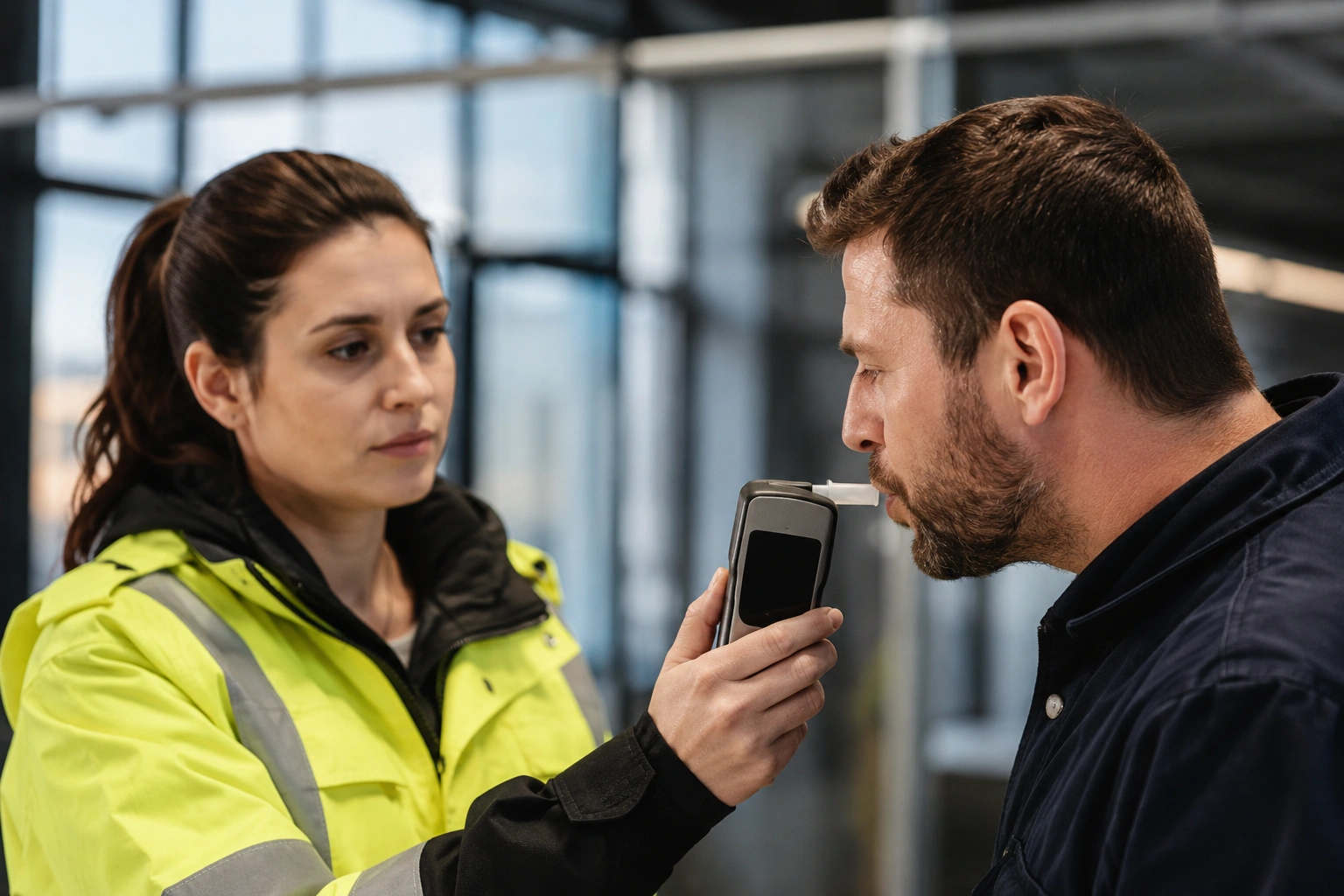

You are driving home. Nothing unusual. Maybe a broken taillight, or you rolled into a R.I.D.E. checkpoint. An officer approaches, holds up a small device, and asks you to blow. No smell of alcohol, no erratic driving, no admission of anything. Still, you have to comply. That is Mandatory Alcohol Screening in Canada, and a lot of Ontario drivers are genuinely caught off guard the first time it happens to them.
This post breaks down exactly what MAS is, when it applies, what happens if you refuse, and why getting solid legal advice early makes a real difference if you end up facing charges.
How Mandatory Alcohol Screening in Canada Actually Works
Mandatory Alcohol Screening in Canada became law on December 18, 2018, through amendments introduced by Bill C-46. Before that change, a police officer had to have reasonable grounds to suspect that a driver had alcohol in their body before demanding a roadside breath sample. That requirement is gone now, at least for the first test.
Under section 320.27(2) of the Criminal Code, a peace officer who has lawfully stopped a driver and has an approved screening device (ASD) in their possession can demand that the driver provide a breath sample right away. No suspicion needed. No explanation required. If you are behind the wheel and the officer has the device with them, you have to blow.
The ASD is the handheld roadside device. It is not the same machine used for the evidential breath test at the station. The roadside result produces a Pass, Warn, or Fail reading. A Fail, combined with other signs of impairment, gives the officer grounds to demand a second, more precise breath test using an approved instrument. That second test is what can lead to a criminal charge.
It is also worth knowing: you have no right to consult a lawyer before complying with a roadside ASD demand. That right becomes available after arrest.
The Roadside Test and What Comes After It
There is a common mix-up here that matters a lot in court.
The MAS breath test at the side of the road is a screening tool. Its result alone cannot be used to charge you criminally. What it does is give police the grounds to continue the investigation. If you fail the roadside test, the officer can arrest you and take you to the station for an evidential breath test on a more sophisticated, approved instrument.
That station test is what the Crown relies on to prove a blood alcohol concentration (BAC) of 0.08 percent or higher. This is the threshold for an over-80 charge under the Criminal Code. A BAC between 0.05 and 0.08 typically results in administrative licence suspensions under Ontario’s Highway Traffic Act rather than criminal charges, though the exact consequences can vary.
This two-step process matters when building a defence. The screening result and the evidential test result are different pieces of evidence governed by different legal rules.
Screening for Drugs or Alcohol: Where the Rules Are Different
Screening for drugs or alcohol is not treated exactly the same way under Canadian law, and that difference matters.
For alcohol, section 320.27(2) gives police broad authority with no suspicion required. But for drug impairment, section 320.27(1) still applies. That provision requires the officer to have reasonable grounds to suspect that a driver has consumed drugs and operated a vehicle within the previous three hours. Drug screening typically involves standardized field sobriety tests or oral fluid samples rather than a breath device.
So if an officer demands a drug evaluation during a stop where nothing pointed to drug use, that demand can be legally questioned. Understanding Mandatory Alcohol Screening in Canada is important even when drugs are the underlying concern, because the two types of demands carry different legal standards and different defence angles.
Can You Refuse? What the Law Says
Refusing to comply with a Mandatory Alcohol Screening in Canada demand is a criminal offence under section 320.15 of the Criminal Code. And the penalties are, perhaps surprisingly, at least as serious as those for impaired driving itself.
For a first offence, a refusal conviction carries a mandatory minimum fine of $2,000. That is higher than the $1,000 minimum for a first-offence impaired driving conviction when the blood alcohol concentration is below a certain level. Subsequent offences can lead to mandatory jail time.
Refusal does not only mean saying no outright. You can also be charged if you:
- Pretend to blow without actually providing a proper breath sample
- Stall long enough that the demand is no longer considered immediate
- Fail to follow reasonable instructions during the screening process
The word “immediately” in the legislation is important for both sides. Police must make the demand promptly after the stop, and you must comply promptly. If an officer caused significant delays, or had to call for a device to be brought to the scene, those procedural gaps can sometimes form the basis of a defence. Courts have, in some cases, excluded evidence or dismissed charges when officers did not follow the correct sequence.
Your Rights When You Are Stopped for Alcohol Screening in Canada
A question that comes up regularly is whether MAS violates section 8 of the Canadian Charter of Rights and Freedoms, which protects people from unreasonable search or seizure.
Courts have addressed this. The general position so far is that MAS represents a reasonable limit on Charter rights under section 1, given the public safety interest in reducing impaired driving on Canadian roads. The Supreme Court of Canada has not issued a definitive ruling on the 2018 provision specifically, but lower courts have largely upheld the law. The Canadian Civil Liberties Association has raised serious concerns, and the legal conversation is still active.
Practically speaking, arguing that the stop itself was unconstitutional is a harder defence path. But the way the demand was made, the equipment used, the timing, the officer’s conduct, and what happened after the stop are all fair ground for a careful legal review.
What you do have, regardless of MAS:
- The right to know why you are being detained
- The right to retain and instruct counsel without delay after arrest
- The right to remain silent after arrest
None of those rights disappear just because MAS lowers the threshold for demanding a breath sample.
What a Fail Reading Can Mean for You in Ontario
If you fail the roadside ASD test and are taken to the station, things move fast. The officer will arrest you, inform you of your right to speak to a lawyer, and bring you in for samples on an approved instrument under controlled conditions.
Depending on those results, you may face a charge under section 320.14(1)(b) for having a BAC over 0.08 percent, a charge for being impaired by alcohol, or both. There may also be an immediate 90-day administrative licence suspension under Ontario law, separate from any criminal charge.
The long-term consequences of a conviction are worth knowing clearly:
- A criminal record that can affect employment
- Travel restrictions, particularly to the United States
- Loss of or restrictions on certain professional licences
- Significant increases in car insurance premiums
- Possible ignition interlock conditions on future driving
These consequences are not minor, and they do not disappear quickly. That is exactly why speaking with a defence lawyer as early as possible changes the picture more often than people expect.
Facing a Charge After a Stop? Talk to Kazandji Law
If you have been through Mandatory Alcohol Screening in Canada and are now dealing with a charge, the best time to get legal advice is right now. Before your next court date, before you speak to the Crown, and before you make any decisions about how to respond.
At Kazandji Law, we defend impaired driving and related charges across Ontario, including those that arise directly from MAS stops. We look at the full sequence: whether the stop was lawful, whether the demand was made correctly and immediately, whether the ASD used was properly approved and calibrated, what the officer observed and recorded, and how the station evidence was collected. Any one of those steps, done incorrectly, can change the direction of a case.
You can reach us at 647-588-3234 for our Toronto office or 647-588-3234 for Thornhill. You can also reach us through our contact page or review our impaired driving defence page for more detail on how we handle these cases.
If you were asked to provide a breath sample and things went sideways, speak with us before you assume the outcome is already decided.